
Table of Contents
Scaling is rarely limited by ambition. Most companies already know they want to grow. What slows them down is the order in which they try to fix things. Nearly seven in ten organizations (69%) report difficulty recruiting for full-time roles, that shows how hiring pressure persists even as businesses try to scale.
Recruitment gets attention first, then systems and processes. And after some time, the conversation shifts to the employer brand. Each decision feels reasonable in isolation. But together, they often create confusion about what’s actually holding growth back.
The main problem is usually moving to the next initiative before the previous one is ready. That’s when progress starts to feel uneven, despite constant effort.
This article introduces a simple fix-order framework to help leaders decide where to focus; recruitment, ops, or employer brand, before scaling. The goal is straightforward, build a scale hiring strategy that supports growth without creating new pressure points.
Why Your Effort to Scale Hiring Strategy Can Fail?
Every scaling phase exposes a different weakness.
- Early on, systems start slipping.
- Mid-stage growth breaks teams
- Rapid growth breaks culture and reputation
Yet many companies treat scaling like a checklist by trying to fix everything at once. They increase their headcount, invest in new tools, and push brand campaigns all simultaneously. And that ends up burning their teams and the effort to scale hiring strategy starts failing before it even has a chance to work.
A smart scaling checklist is about sequencing them instead of emphasizing on more initiatives. So, before investing in recruiters, or employer branding, ask one honest question: Where will growth break us first?
That answer determines whether you focus on hiring vs operations, or whether the brand is even relevant yet.
The Three Pillars That Break During Growth
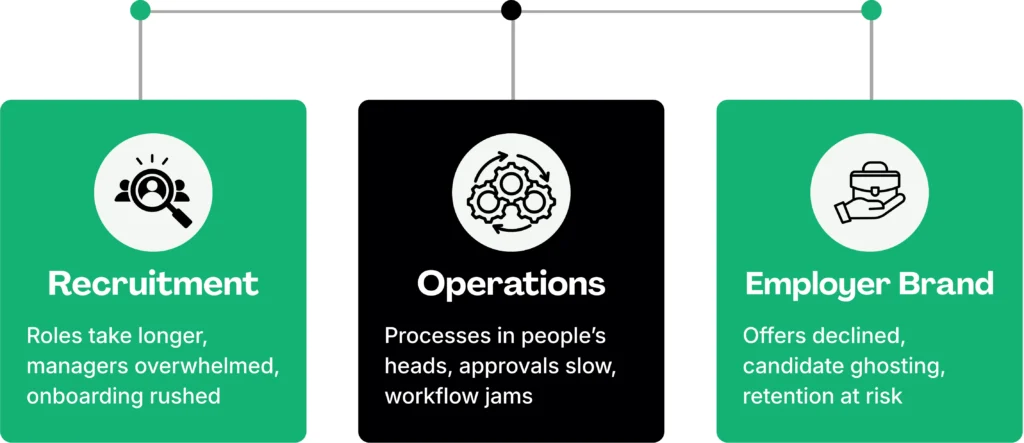
Growth rarely breaks everything at once. It usually applies pressure in specific places, and the cracks show there first. For most scale-ups, those pressure points fall into three areas.
Let’s ground this discussion in reality.
Recruitment
When growth increases, the pressure usually shows up in the team first. Roles take much longer to fill than planned and onboarding becomes rushed. And the primary issue is whether your hiring process can handle the pace without overwhelming managers or creating a bad candidate experience instead of just attracting them.
Operations
Teams now usually struggle because the way work gets done no longer fits the size of the company. Things that once worked start breaking quietly. People ask more questions, approvals take more time, and new hires slow everyone else down because nothing is written or they rely too heavily on tribal knowledge.
Employer Brand
As companies grow, reputation begins to influence who applies, who accepts offers, and who stays. Candidate expectations rise, and inconsistencies between promise and experience become harder to ignore. Employer brand matters most when the market is watching closely.
All three areas are important, but rarely at the same time. A practical scale hiring strategy focuses on the pillar under the most pressure right now, rather than the one that sounds most good in board meetings.
Step One: Understand Where Scaling the Hiring Strategy Breaks
Any attempt to fix growth issues without clarity risks solving the wrong problem. So keep that in mind, what appears urgent is not always what is actually breaking.
Here’s a quick growth diagnosis you can do:
- Are roles open longer than planned, delaying delivery? → Recruitment strain
- Are new hires productive slowly or inconsistently? → Operational strain
- Are candidates declining offers or ghosting late-stage interviews? → Brand strain
The goal is to spot where the pressure is building. Growth doesn’t break everywhere at once, it shows up first in one area and you need to focus on that before you move on to anything else.
When Recruitment Is the First Thing to Fix
Recruitment should be your priority when growth is being delayed just because of chaos.
When Operations Must Be Fixed Before Hiring More People
Many companies assume hiring alone can solve growth challenges. It doesn’t. Weak operations turn every new hire into added complexity rather than increased output.
You should pause hiring and focus on operations when you notice:
- New hires require excessive guidance to get work done.
- Key processes exist only in people’s heads, instead of documented systems.
- Teams repeatedly run into the same issues, slowing delivery.
Fixing operations means creating clarity and stability:
- Assign clear ownership for every process.
- Document workflows so work can continue smoothly, (even if someone is absent).
- Use tools that actually support scaling.
- Define decision rights early, so teams know what they can decide independently.
Without these fixes, recruitment becomes a revolving door, you hire more, but output and consistency don’t improve. Operations first ensures every hire actually drives growth.
When Employer Brand Actually Matters (And When It Doesn’t)
Employer brand is important, but it’s often misunderstood. Its impact depends on timing and context.
It matters most when:
- You’re competing for senior talent
- Candidates have multiple offers
- Reputation impacts conversion at final stages
- Growth depends on long-term retention
However, it matters least when:
- Hiring volume is low
- Roles are transactional or short-term
- Internal experience doesn’t yet match the promise
- Leadership hasn’t aligned on values in practice
Employer brands should reflect reality. If you focus on it before recruitment and operations are in order, candidates come in with expectations your company can’t yet meet. A strong scale hiring strategy builds brand only after hiring runs smoothly and internal systems can handle the load without cracking.
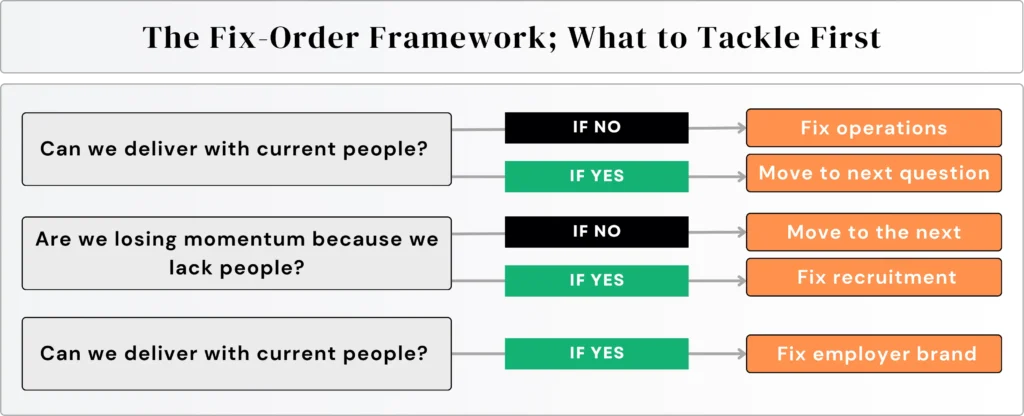
The Fix-Order Framework: What to Tackle First
Instead of debating priorities endlessly, use this simple sequencing logic:
1. Can we deliver with the people we have?
- If no → Fix operations
- If yes → Move to next question
2. Are we losing momentum because we lack people?
- If yes → Fix recruitment
- If no → Move to the next
3. Are we losing candidates due to perception or trust?
- If yes → Fix employer brand
This framework helps you cut through the noise and focus on what really matters. It replaces your doubts with clear next steps, so your scale hiring strategy tackles the issues that actually hold you back.
Why Fixing the Wrong Thing Slows Everything Down
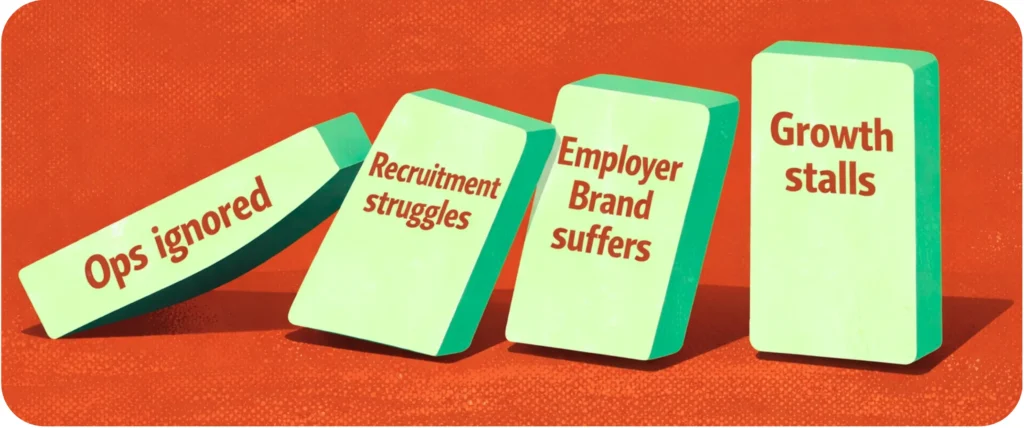
When you fix the wrong thing first, it costs more than money. Hire too early, and see how your payroll goes up without real results. Push branding too soon, and candidates end up being disappointed. And when you wait too long on operations, teams start burning out.
One mistake just feeds the next. Scaling is never a concept of doing everything at once. It’s about tackling the right thing at the right time.
Our Perspective
How your recruitment, operations, and employer brand are performing is a reflection of how ready your company actually is.
Before you push to scale, take a step back and ask yourself: What would break first?? What would fall apart if the pressure doubled?
Be honest with yourself, and the next steps usually become obvious. When you focus on what’s really getting in the way, scaling feels less confusing and a lot more doable.