
Table of Contents
For years, B2B companies have been told the same thing: “Build the CEO’s personal brand.” And to be fair, having a visible and thoughtful CEO does help, as leadership presence can create credibility.
But here’s the reality most teams don’t question enough.
Relying on one person’s personal brand, even the CEO’s, is one of the most limiting marketing strategies, especially in a country with as much trade as the United States. When all brand visibility is centered around a single voice, growth eventually fades. No matter how strong the CEO’s content is, one perspective can only go so far.
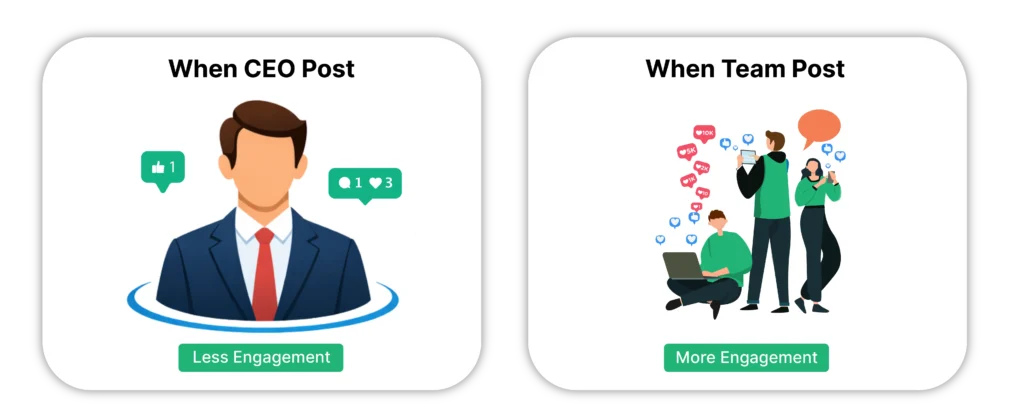
While companies focus on amplifying one personal brand, they often overlook a far more scalable approach, employee advocacy as a marketing channel. Interestingly, employee-shared content generates up to 8x more engagement than brand-only posts.
Why One Voice Can’t Carry Your Entire Brand
Personal branding works, but only when it’s spread across the team. Most B2B companies treat visibility in a very specific way: the CEO becomes the public face, the company page handles announcements, and employees remain largely silent online.
That model might have worked five years ago, but it no longer reflects how trust is built in modern B2B markets. Now, audiences crave real connection, they want to see the faces behind the brand. They’re more interested in experiencing culture and the work environment through employees’ eyes, because that content feels authentic and filter-free. And that’s what drives growth in the long run.
The Power of Employee Advocacy : Over Company Posts
Let’s talk about reach for a second.
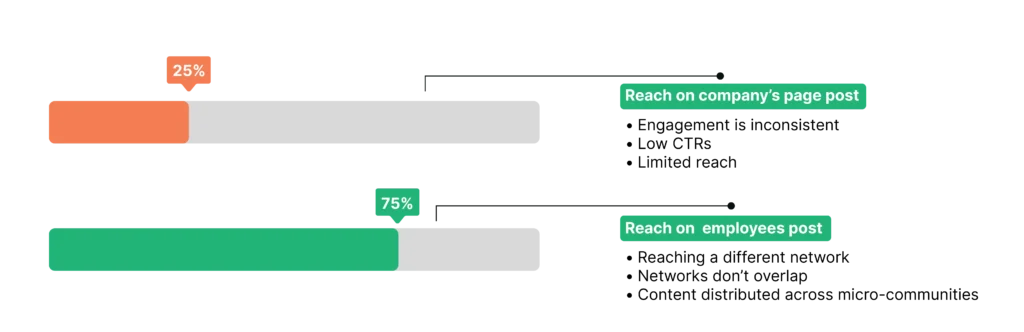
From a pure distribution standpoint, company pages are limited. Organic reach is gradually shrinking, and engagement is inconsistent. CTRs often remain low despite high-quality content.
Now compare that to a simple alternative. Instead of one company page post, imagine the same message being shared by 40 or 50 employees, each using their own voice and reaching a different network. Those networks don’t overlap perfectly. Suddenly, the content is distributed across 40 micro-communities, mostly where your target buyers and candidates already live.
This is why employee advocacy as a marketing channel is so effective. That piece of content feels like a recommendation or a shared experience, rather than a typical corporate post.
The Algorithm Also Favors People Two Sides of the Same ROI Coin
Social platforms are built for interaction, which is why personal profiles consistently outperform company pages. According to research, brand messages shared by employees reach 561% further than those shared by official company accounts.
When an employee shares a post, it feels like:
“Someone I know is saying this.”
When a company page posts the same thing, it feels like:
“Another brand talking at me.”
Algorithms prioritize the former, and audiences respond to it more naturally. The difference is even more obvious in the United States, where LinkedIn plays a major role in B2B decision-making and recruitment. Personal posts feel familiar and trustworthy, whereas brand posts often feel promotional even when the content itself is valuable.
This dynamic alone explains why employee advocacy as a marketing channel drives better click‑through rates and stronger engagement without increasing ad spend.
Your Employees Are Already Brand Ambassadors (Whether You Like It or Not)
Whether companies plan for it or not, employees already shape the brand. They talk about wins, project launches, and career milestones. They share lessons learned and moments from behind the scenes. These posts may seem casual, but they quietly influence how the brand is perceived online.
Intent Turns Casual Sharing into Strategy
The difference between scattered visibility and a true workforce brand ambassador strategy is ‘intent’. With a bit of alignment and encouragement, those everyday moments turn into consistent brand signals. But often without structure, they disappear into the feed.
Small Signals Have Big Impact in the U.S. Market
In competitive U.S. markets, where attention is fragmented and trust takes time to build, those small signals add up faster than polished campaigns ever could.
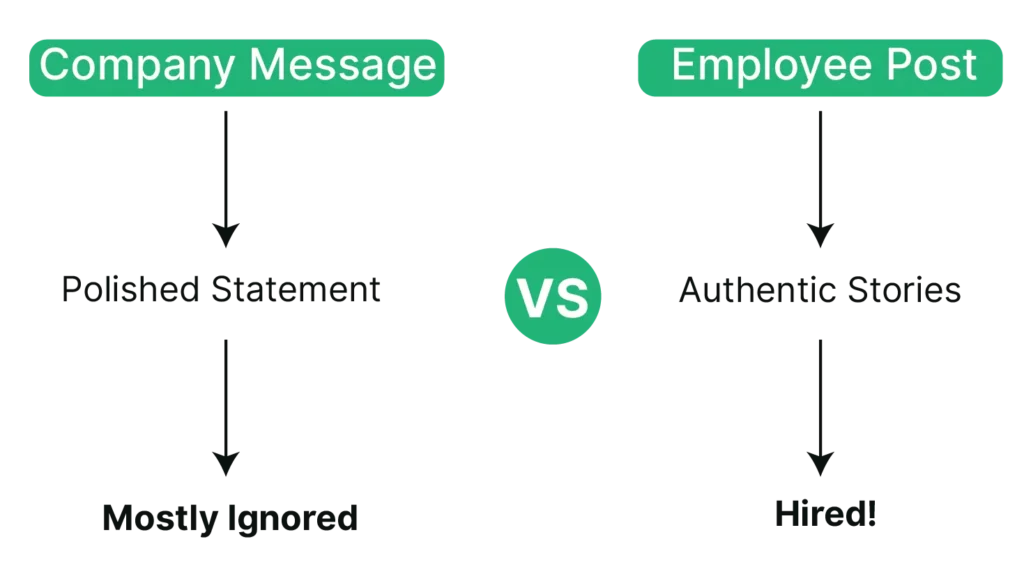
Comparing Company Pages vs. Employee Advocacy
How Employee Advocacy Drives Real B2B Growth
Employee advocacy is a strategic growth lever that can transform business outcomes. In the United States, where audiences are overloaded with branded messaging, employees are the ones who can cut through the noise.
- Measurable Impact
Track metrics like:
- Engagement rate (likes, comments, shares)
- Click-through rate on links
- Candidate reach for recruitment campaigns
- Influence on pipeline and conversions
Over time, these metrics compound. Regular employee posts create long-term credibility and visibility, boosting brand recognition, and lead generation.
- Humanizing Your Brand for the U.S. Audience
Buyers value transparency and authenticity. Employee posts give them a real view of your company culture, processes, and expertise. So humanize your brand and make your business feel approachable. This kind of social proof strengthens trust in a way that traditional campaigns can’t replicate.
3. The Feedback Loop
Employees provide real-time insights.
– Which posts get engagement?
– Which topics spark conversation?
This feedback helps marketing teams adjust strategy, making employee advocacy a continuous learning and growth tool.
Social Proof Works Best When It’s Human
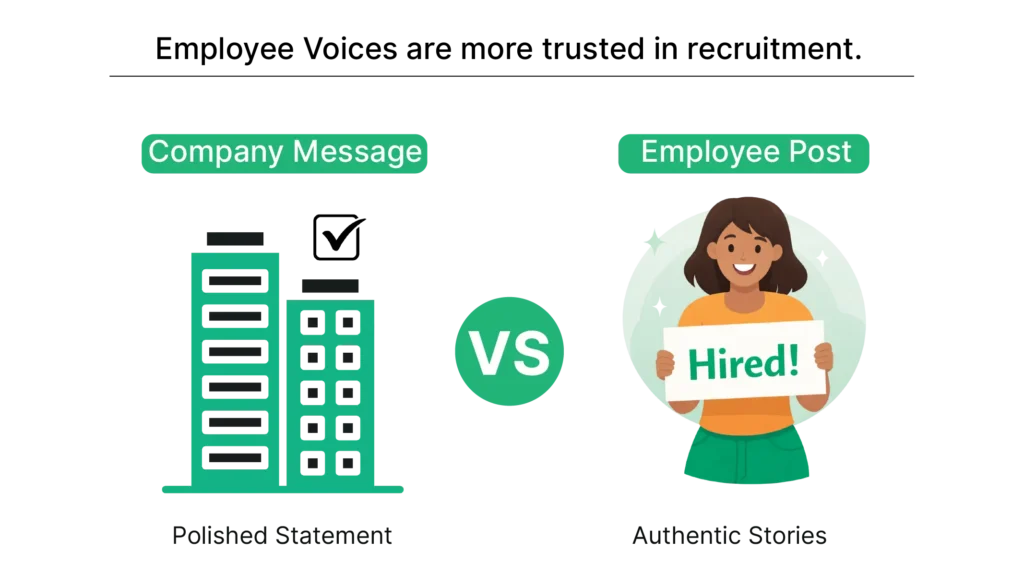
Company pages can say all the right things about values, and expertise. But audiences are far more likely to believe those claims when they come from employees.
In recruitment, this impact is especially clear. Candidates in the United States research companies deeply before applying. They scan LinkedIn profiles, read employee posts, and look for authenticity.
This is where social proof in recruitment becomes powerful. A recruiter sharing a placement win or a marketer reflecting on a campaign carries more weight than any branded testimonial. It feels real because it is real.
So, if you’re ready to build your personal brand and amplify your LinkedIn presence, get in touch with us at marketing@bpowizard.com or connect with us on LinkedIn
Ending Note
Building a strong B2B brand is all about the voices behind the brand. Employee advocacy as a marketing channel gives your team the tools to promote your message, and create authentic connections with audiences in the United States and beyond. Every post your employees share has the potential to reach new networks, and build trust, if they’re approached strategically.
If you’re ready to tap into the full potential of your workforce and boost your digital presence, reach us now. Let’s turn everyday employee voices into measurable business growth.
FAQs:
Employee advocacy turns your workforce into authentic brand ambassadors. When employees share content, it reaches wider networks, and builds trust more effectively than company pages alone. In the U.S., where LinkedIn is a key platform for B2B marketing, employee-shared posts can drive measurable increases in CTR, and brand awareness.
The most effective posts are authentic, and relevant to their network. For example:
- Wins and milestones (project completions, promotions, campaign results)
- Behind-the-scenes moments and company culture highlights
- Thought leadership posts or reflections on trends
- Industry insights
Encouraging employees to share these types of content consistently amplifies reach, and humanizes your B2B brand, which is the biggest social proof you can own.
ROI can be tracked through several metrics:
- Engagement rates (likes, comments, shares)
- Click-through rates on links
- Audience growth and reach
- Candidate applications or lead generation influenced by employee posts
Over time, employee advocacy builds long-term credibility and visibility, which is your biggest asset.