Table of Contents
It’s just a day before the annual holidays. The office is a mix of chaos and coffee. Inboxes are overflowing, and talent leaders are somewhere between spreadsheets, reports, and half-finished dashboards.
Doesn’t every year-end feel like this? Frantic, chaotic, and just a little overwhelming.
At this time, most teams are running their year-end audits, but the thing is, they are just scratching the surface. They focus on numbers (time-to-fill, cost-per-hire, headcount targets) and miss what really drives talent success. Meanwhile, the calendar is rushing into January, and the pressure is on to start 2026 strong.
The only thing that can come to the rescue is this three-pillar check. So before you start firefighting on your own, give it a read!
Why the Three-Pillar Check is the New Standard
Everyone talks about audits, yet 80% of CAEs say data analytics in internal audit functions isn’t delivering the outcomes they want (Gartner, Inc.). So numbers alone aren’t solving the problem.
This is where the Three-Pillar Check comes in. It’s an audit framework that, along with studying the metrics, also ties hiring performance, culture, and brand health together in a way that’s critical yet actionable.
Pillar 1. Hiring Performance: Behind Basic Metric
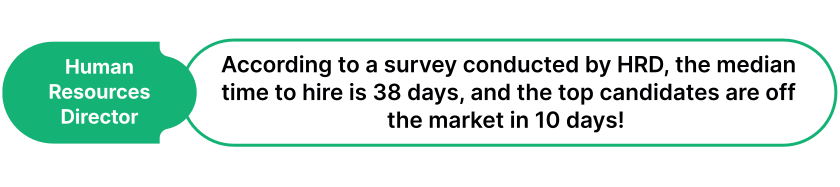
Your team is reviewing December hires. The spreadsheets look fine, roles are filled, KPIs are met, but something feels off. A few new hires are already disengaged, a role took weeks longer than expected, and the cost-per-hire is rising behind your back.
What to Measure
A thorough hiring audit goes way beyond the obvious numbers. What you need to measure in a hiring audit is:
- Quality of Hire: Are new employees performing as expected? Are they likely to stay?
- Source-to-Hire Conversion: Which channels actually deliver top talent?
- Early Turnover Risks: Subtle signals during onboarding that hint at potential attrition.
Role of Predictive Tools
AI-powered tools can spot these trends before they spiral. They help turn what looks like chaos into data-driven clarity. By connecting these insights to workforce planning, you can close positions and build a pipeline that can grow better in 2026. Or you can just ping us and we’ll do that for you.
Pillar 2. Culture Health Check: The Invisible Driver
You are in a meeting, and the manager is talking about how disengaged the employees are. Then one person stands up, talking about how high performers are eyeing the competitors. Such a chaos shows that the team culture is disturbed.
What to Audit
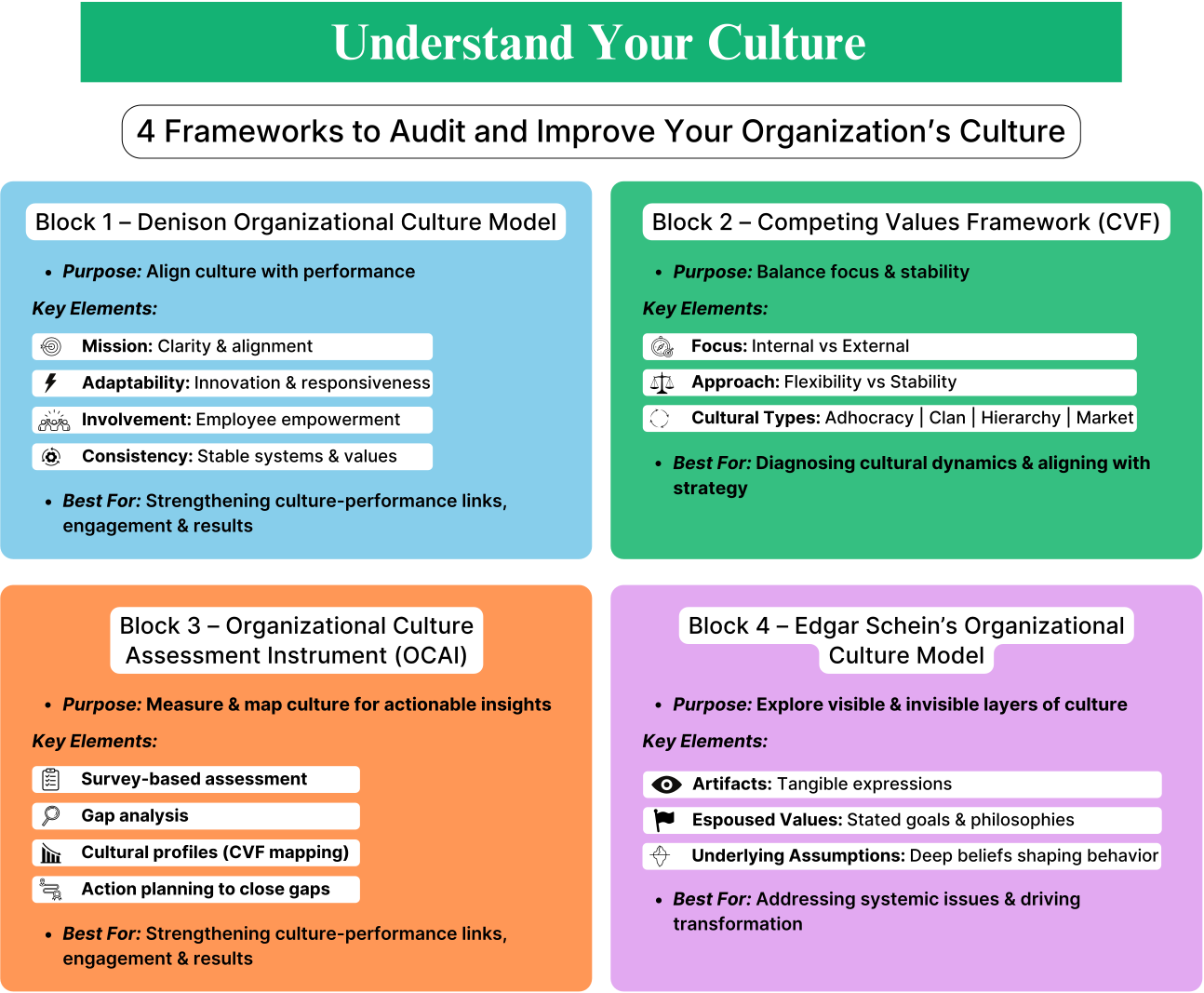
A culture audit asks questions about your internal culture, like:
- How engaged are your employees?
- Are diversity, equity, and inclusion (DEI) applied into hiring and promotion pool?
- Does your candidate’s experience match the culture your employees describe?
Culture Leaks that Sabotage Recruitment
Even top talent won’t accept offers if your culture doesn’t resonate with them. These high rejection rates can lead to misalignment between your EVP (Employee Value Proposition) and the actual employee experience.
To sum it all up, a culture audit will help you align with your company’s values and mission. It helps you identify your strengths and gaps and then take action accordingly.
Pillar 3. Employer Brand Health: The Revenue Driver
In the hallway, a recruiter whispers about a candidate who rejected an offer because of negative online reviews. Across the office, you see someone scrolling through the careers page. The bounce rates are high, and applications are incomplete.
Your employer brand is no longer a “nice-to-have”; it’s a critical recruitment and retention metric.
What to Audit
A good employer brand audit includes:
- Monitoring social proof and online reviews
- Tracking career page conversion and drop-off metrics
- Measuring candidate experience scores
Why Brand Health Matters for 2026?
When you have a strong employer brand, it directly impacts your hiring success and employee retention. A poor candidate experience or negative perception can cost you thousands of dollars per role, all lost in trying to maintain productivity and turnover. That’s where BPO partners with marketing and branding expertise can help. They help in supporting your team to create a consistent, attractive brand that actually works.
How Do These Three Pillars Intersect?
By now, the situation is very clear: December chaos, impending January goals, and teams holding it all together by one string. But what would happen if these pillars are disconnected? A strong employer brand can’t save a poor culture, and excellent hiring metrics mean little if employees leave.
The Three-Pillar Check connects these dots. It makes sure that hiring, culture, and brand keep each other in the loop. When done right, it can change these frantic year-end audits into strategically planned sessions for 2026.
What to Watch for in 2026?
- Employer brands can’t hide anymore (and that’s a good thing): Candidates see everything from culture to leadership behavior and even how you treat people on bad days. The companies winning talent in 2026 are the ones being honest, not perfect.
- Culture is now a ‘metric’: Engagement and retention of employees are now measured like revenue and growth. If you can’t quantify culture, you can’t improve it. Feel-good slogans won’t be enough anymore.
- RPO is stepping out of the back office: The best RPO partners are helping you curate a better workforce strategy and clean up broken hiring processes. So in 2026, think of them as a strategic partner rather than a vendor.
From Chaos to Calm
The end-of-year chaos is real. But it doesn’t have to end in burnout. By adopting the Three-Pillar Check, organizations can move beyond spreadsheets and start 2026 on a better foot. Hiring, culture, and brand health aren’t separate tasks. They’re interconnected pillars that set the stage for stronger teams, better retention, and a competitive edge.
So, take a deep breath, grab that coffee, and turn this year’s year-end chaos into a launchpad for success. Your 2026 workforce strategy awaits you. What’s something you would be focusing more on this year?
FAQs:
Frequently Asked Questions
An end-of-year recruitment audit is a structured review of hiring, culture, and brand to see what worked, what didn’t, and what needs fixing before 2026.
Numbers without context don’t tell the full story. You might hit your hiring targets and still struggle with disengaged teams or offer rejections. Traditional audits focus on what happened. Modern audits ask why it happened and how to fix it before the next year starts.
The Three-Pillar Check is a year-end audit framework that evaluates:
- Hiring performance (speed, quality, efficiency)
- Culture health (engagement, alignment, DEI)
- Employer brand health (candidate experience, perception, trust)
The idea is simple: if one pillar is weak, the others suffer too.
Ideally, between mid-November and early January. That’s when patterns are clear, but there’s still time to adjust strategy before Q1 hiring begins in full force. Waiting too long means carrying the same problems into the new year.