
Table of Contents
“You lose 6 out of 10 candidates to a slow hiring process before they even join.”
If it were a couple of decades ago, this stat wouldn’t have mattered much to employers, but now, it speaks volumes. The recruitment process has become more candidate-centric. The candidates are more like customers with a lot on their plate, and they can pick and choose. A benefit (or drawback) of having options at their fingertips is that candidates are highly aware of their choices, and they will decide what suits them best.
So, in this situation, how would you know what suits them the best? If you ask us, we’d assume their role and then, through that lens, see what is lacking and where to put in more effort.
This guide will help you see it through their lens. We will guide you through the candidate journey, mapping each step along the way, to help you make it a better and more fruitful experience for your candidates and ultimately for yourself.

What is The Candidate Journey in 2026?
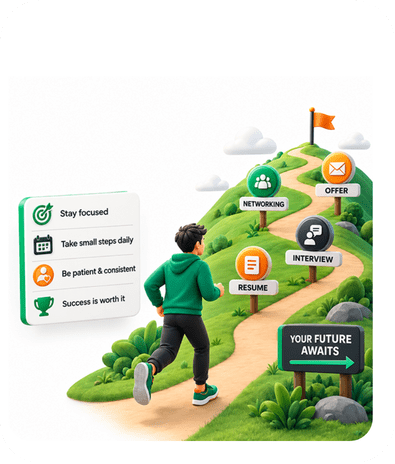
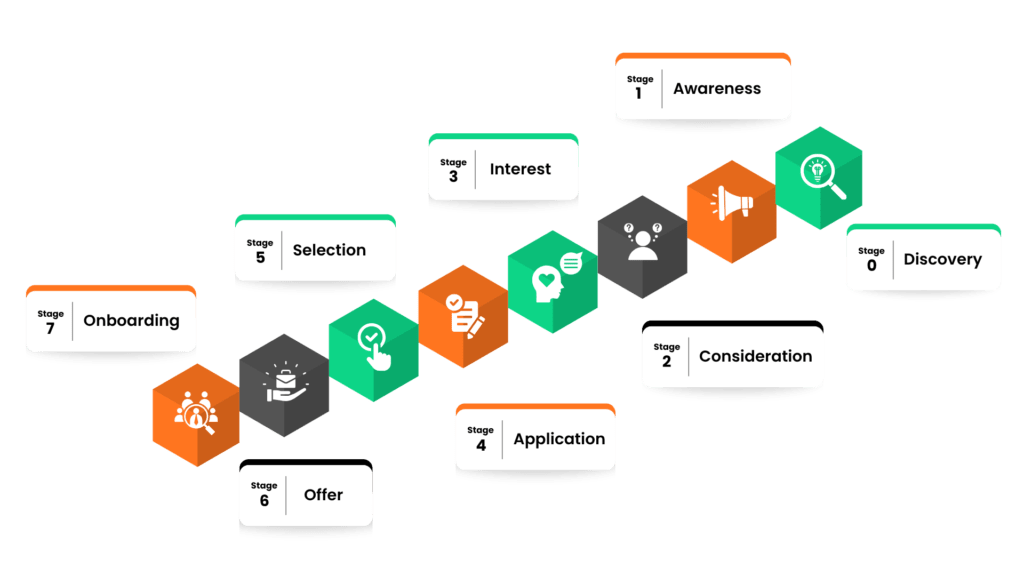
The candidate journey (which you might have heard of as the candidate experience or the recruitment funnel) is a whole series of interactions a candidate has with you. It starts the minute you post a job ad, which is long before they even apply for the job. The journey then goes through all the stages in between to a point of job offer and onboarding.
It spans eight critical stages, beginning with passive discovery, moving through active awa reness, and culminating in onboarding.
Why Does The Candidate Journey Matter to Recruiters?
The candidate experience is what directly impacts the candidate journey’s success or failure. Think of it as a funnel where, at every step, the candidates get fewer and fewer who move forward. This narrowing process is mainly dependent on the candidate’s experience. What you can do here is make the process more streamlined and easier for the candidate. It also directly has an impact on who you end up hiring or how fast the hiring process goes.
Rising candidate drop-off rates are now a top hiring risk, with 950,000 U.S. layoffs reported by September 2025, which surpassed a million by the turn of the year. (CBS News)
As a recruiter, understanding the journey in 2026 matters more than it ever did. Think of this recruitment funnel optimization as a personal investment for the long run, which will bring better results.
- Better outcomes: A smoother journey means more candidates reach the offer stage, which improves the overall hire quality.
- Attracts top talent: A positive experience can turn passive candidates into applicants, and they are more likely to spread the good word.
- Faster hires: When you streamline the process and remove any unnecessary disruptions that have been causing delays, you will secure the best candidates before your competitors.
- Stronger employer branding: Treat your candidates nicely, as each step in the process affects how people remember your company and whether they talk about it positively.
Stages of The Candidate Journey
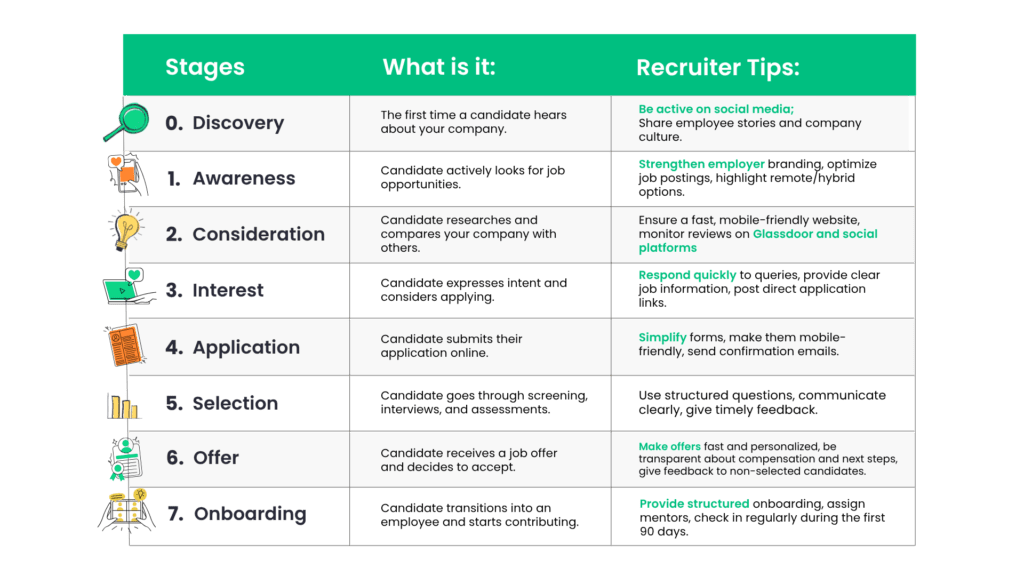
The candidate journey is the practical application of your company’s recruitment process. When you break it down into seven stages, you can better understand what needs to be improved at each touchpoint. Some people even divide this journey broadly into two, based on which stage needs more attention by the specific department.
Stage 0: Discovery
Discovery is when job seekers just happen to know about your company when they aren’t actively looking for your company. It is the stage that isn’t essentially part of the candidate journey, but it influences whether the journey shapes in your company’s favour or not.
They can find you through social media algorithms, viral content, or in job feeds. Sometimes, employee referrals or someone from the industry discussing your company can lead a job seeker to discover your company.
Why it matters: Someone mentioning you in a group of people would leave an impression on a potential candidate. Even if they are not looking for a job, it will pique their interest, and they’d want to know more about you.
How can recruiters improve it:
- Be more active on social media platforms and employee networks.
- Share your company and employees’ stories and company insights.
People like companies that showcase their real team culture.
Stage 1: Awareness
Awareness is when a candidate goes to your company page and looks for the opportunities you have to offer.
Job seekers can find you through your careers page or through job ads. Targeted campaigns for hiring and your PR can also play a key role in building awareness about your company among the public.
Why it matters: It is mainly when the person is actively job hunting, so they already have the market knowledge and are aware of the competition. This is your chance to stand out among the competitors.
How can recruiters improve it:
Recruitment marketing is the main character here. Your employer branding and optimised job posting will make or break the game.
According to LinkedIn, 72% of recruiters think that their employer branding has a strong impact on hiring decisions.
- Your job descriptions should be elaborate and cover all the aspects a job seeker might want to know about the job before applying.
- A buzzword these days that catches everyone’s attention is whether it’s a remote or hybrid work model; make sure to mention it.
Stage 2: Consideration
At the consideration stage, the candidates know you are one among many, but they are still considering if they want to work for you.
What helps candidates in the consideration process is reviewing the company’s testimonials, Glassdoor reviews, and its LinkedIn profile.

Why it matters: The consideration stage is one of the most crucial stages, as candidates transition from passive interest to intent.
How can recruiters improve it:
- At first, you have to make sure that the candidate, when applying, has an easy interface, either through mobile or computer, and the page doesn’t take too long to load.
- Keep an eye out for the Glassdoor reviews and communities to see what people are saying about your company.
Though these small improvements don’t seem much in the beginning, they can later amplify and create a bigger impact.
Stage 3: Interest
This stage is the final test for the recruitment marketing team. It’s when job seekers consider applying to your company.
At this stage, the candidates sign up for job alerts and newsletters, and talk to the recruiters about the job and the application process. In short, it is when the candidate is clearing his last-minute doubts before applying for the job.
Why it matters: The curious candidates turn to interested candidates at this point. So when you have spent so much time and effort to take the candidate through discovery, awareness, and consideration, why lose them at this final stage when they are just about to hit apply?
How can recruiters improve it:
- One thing that changes the whole scenario at this stage is being accessible to the candidates.
- You must ensure that you respond to every query promptly, making the application process easier and shorter for candidates, so they can easily apply for the job.
- Another helpful approach is to post your job ads on social media and include a link that directs applicants directly to the job application page.
Stage 4: Application
As the name suggests, the stage is as simple as that; the candidate applies for the job opening in the company.
It happens through online application forms and ATS portals.
Why it matters: The application stage apparently looks more to do with the candidate, but the actual work is put in by the recruiter to make this process smooth for the candidate. At any point, the candidate should not feel stuck to a point that they quit applying.
How can recruiters improve it:
- As a recruiter, you have to make sure the application process is easy to follow through.
- Add detailed instructions where you feel the candidate might feel stuck.
- You don’t know whether the candidate is applying through a mobile, or PC, so the job application interface should support both formats.
- After the person is done applying for the job, send an auto-response in the form of a confirmation email or message.
Stage 5: Selection
It is where candidates go through screening, assessments, and interviews to see if they’re a good fit for the role and the company. At this stage, both sides are learning and evaluating each other.
In 2026 and the years around it, it happens through many different channels. It starts with resume and application reviews. Then the selected candidates are called in for phone or video interviews, in which skill tests or assessments are conducted. The form of interviews can be in-person interviews, panel interviews, or practical tasks.
Why it matters: This stage is usually the longest stage, which can either make or break the candidate’s impression of your company. It’s a two-way street where you are evaluating the candidate, and they are judging your company culture and professionalism, too.
How can recruiters improve it:
Yes, it is the longest step, but what you can do is to make it quicker for the candidates. They have had enough time to consider before applying, and now further delay in response might risk them leaving.
- Keep communication clear and frequent, and let candidates know what to expect at every step.
- Use structured questions to make the process fair and consistent for everyone. It also helps reduce unconscious bias and ensures better hiring decisions.
- Always provide timely feedback, even to those who don’t make it through. It shows respect, professionalism, and leaves the door open for future opportunities.
Stage 6: Offer
At this stage, candidates receive an offer of acceptance. The hiring process is finalized, and the candidate decides whether to accept your company’s offer.
The formal offer letters are sent to the selected candidates either through mail or email. It is followed by background checks and salary negotiations. Send a thoughtful email to the candidates who are not selected, stating the reason for rejection very clearly.
Why it matters: This is often the last impression you leave with the candidate. A slow offer process, or lack of transparency, can make the talent walk away. On the other hand, a personalized approach can turn a candidate into a loyal employee even before they join.
How can recruiters improve it:
- One thing that all recruiters should have in the back of their mind is to make the process quick. You have to make sure that the offer looks personal and has that excited, welcoming tone, like it’s coming directly from the hiring manager.
- Be transparent about compensation, benefits, and next steps so nothing feels uncertain.
- Even when rejecting candidates, communicate with kindness and offer helpful feedback. A respectful, friendly tone at this stage leaves a lasting impression that also helps with strengthening your employer brand.
Stage 7: Onboarding
Some people regard this stage not as part of the candidate journey, but we consider the onboarding part equally involved as any other stage. It is when the candidates transition into employees. They start integrating into the company, learning how things work, meeting their teams, and starting their journey as contributors.
The onboarding process starts with the welcome emails, first day introductions, and orientation sessions. It is followed by training programs, completing paperwork, and IT setup.
Why it matters: Onboarding sets the tone for engagement, retention, and long-term collaboration. A positive onboarding experience makes sure that the promises made during recruitment are real. It helps employees feel confident and supported in their new role.
How can recruiters improve it:
- Make onboarding simple, structured, and supportive from day one.
- Deliver on the promises made during hiring and assign mentors to help new hires settle in.
- Make sure there are regular check-ins in the first 90 days, as it builds trust, confidence, and long-term engagement.
How to Track Your Candidate Journey on Each Step
Now that you have seen what each step looks like and how you can improve the candidate journey at each stage, the next thing is how to map the candidate journey. This tracking or mapping puts things into a clearer perspective once you visualize it or have a documented outline for each touchpoint.
Here’s how you can map the candidate journey step by step:
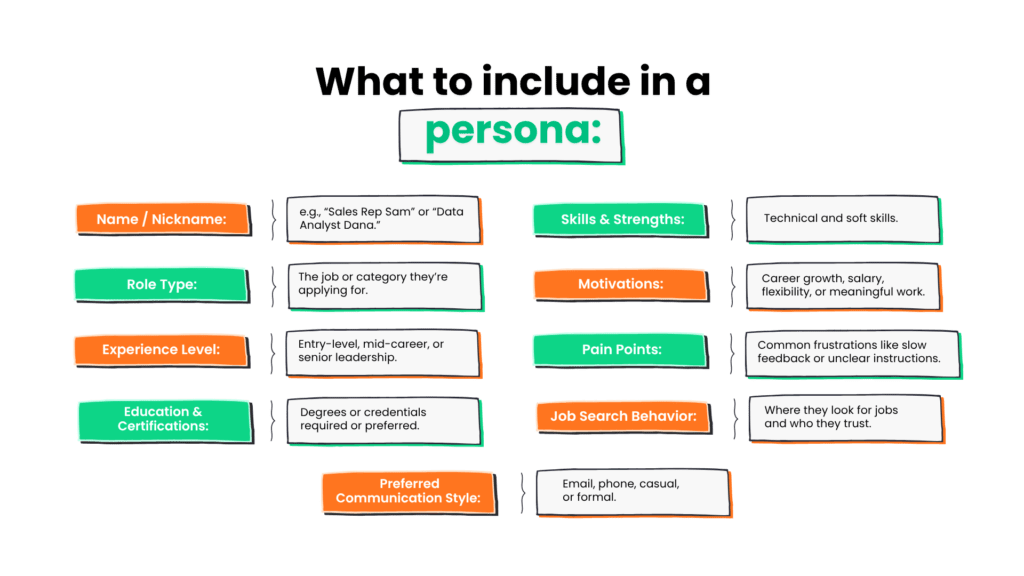
Step 1: Create a Candidate Persona
Before mapping the journey, know who you’re designing it for. A candidate persona is a fictional profile of your ideal hire. It goes beyond resumes and job titles. It talks about what motivates them, what frustrates them, and how they search for jobs.
Step 2: Outline your Recruitment Funnel Stages
Next, outline your recruitment funnel, which includes all the stages of the candidate journey that we have discussed earlier. It is the path candidates follow from first learning about your company to their first day at work. This makes it clear where people drop off or lose interest.
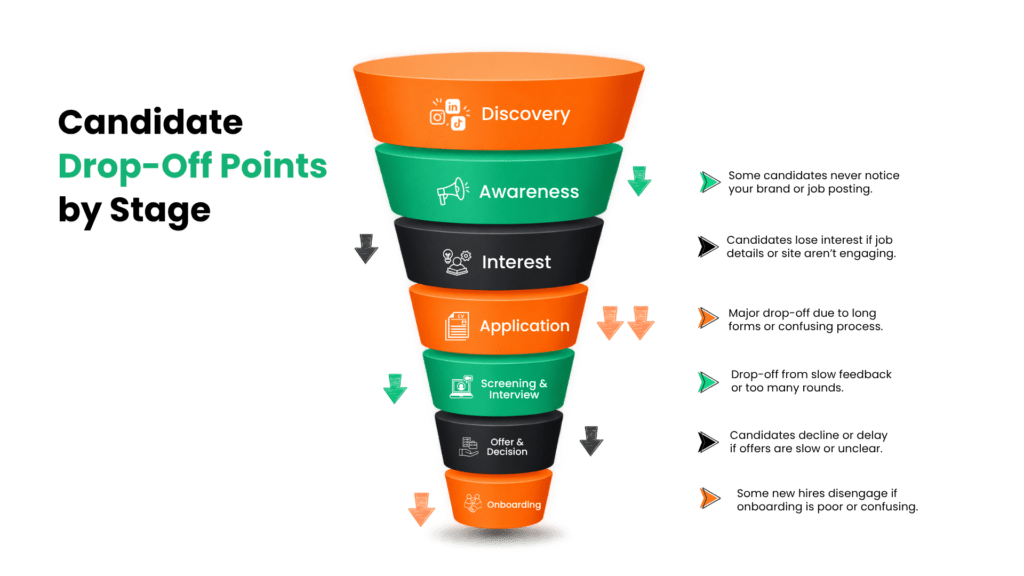
Step 3: Identify the Main Touchpoints and Gather Feedback
Each stage has touchpoints, which are the moments where candidates interact with your company. They shape the experience and bring opportunities for improvement. Understanding these is key to improving your process.
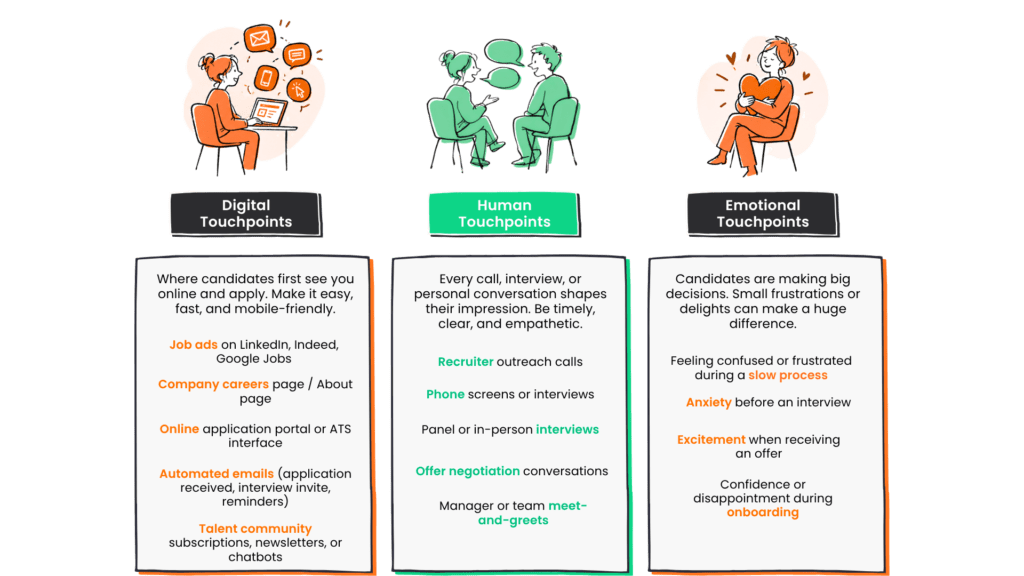
Once you have identified the main touchpoints, the next step is to collect feedback from candidates. It can be in the form of:
- Short post-interview surveys
- Follow-up calls with declined or withdrawn candidates
- Exit surveys for new hires
- Online reviews (Glassdoor, Indeed)
- Track metrics: application completion rate, time-to-interview, offer acceptance rate
Step 4: Focus on the Friction Points
Look at how candidates feel, what frustrates them, and what questions they have at each stage. This might tell you the reasons that might cause drop-offs.
These are the three main things you need to focus on:
- Emotions: It can be hopeful, nervous, frustrated, or excited
- Friction points: The common pain points that cause friction are a lack of updates, long assessments, and unclear instructions
- What they might be thinking: Questions that go through the candidate’s mind could be, “Did they get my resume?” “How long until I hear back?” “Is this role right for me?”
Step 5: Prioritize Improvements and Implement Fixes
Finally, review your map to see where candidates drop off or experience friction. Then prioritize fixes based on impact and effort.
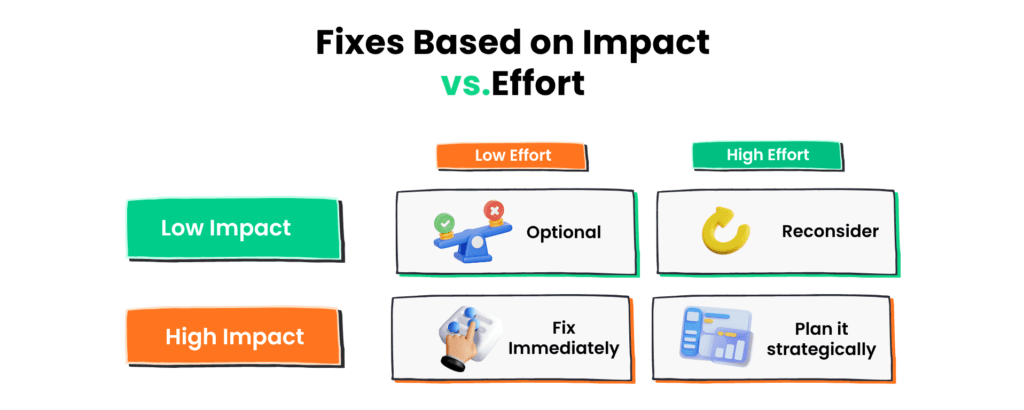
Start making changes, but remember that it’s an ongoing process. At all times, monitor results, gather feedback, and tweak as needed.
These are a few things that would be an ongoing practice and would need changes based on the candidates and their experience.
- Quick wins: Automated “Thank you for applying” messages, interview prep guides, simplified application forms, and response time SLAs
- Bigger changes: Onboarding revamp, interviewer training, and careers page redesign
- Track metrics: Application completion, time-to-hire, interview-to-offer, offer acceptance, candidate NPS, online reviews
How Recruiters Can Improve The Candidate Journey
The candidate journey is your chance to shine as an employer. Combining smart tech, a strong brand, and thoughtful human interactions not only attracts the right people but also keeps them engaged throughout the process.
1. Invest in the Right Recruitment Tools
The right tech stack can make hiring smoother for both your team and candidates. Tools like an ATS keep candidates in the loop with timely updates, friendly emails, and reminders, so no one feels left hanging. You can also make the application process easier with simple, mobile-friendly forms.
2. Showcase Your Company Culture
Candidates care about more than just the role. They want to know who they’re working for. Share your culture, values, and real employee stories on your socials. Tell your story in a way that makes people feel excited to be part of your team. A strong, consistent first impression can make top talent want to engage.
3. Know What the Candidates Want
Hiring is the company’s need, but it’s equally the candidate’s need, too. Candidates look for fair pay, clear expectations, growth opportunities, and a sense of belonging. Once you meet these needs, it will keep them interested throughout the journey.
4. Make Job Ads Human and Inclusive
One of the biggest candidate journey mistakes is automating the communication or making job ads like they are made for bots. Clear, honest job descriptions win over top talent. Focus on responsibilities, must-have skills, and benefits, but keep it simple and jargon-free. Inclusive language matters a lot, and AI tools can help you create such posts that speak to a broader audience without sounding stiff.
5. Get Creative with Promotion
Don’t rely on just one platform. Spread your openings across social media, job boards, and networks where your potential candidates could be. Encourage employees to share openings too. It shows that it’s coming from a personal recommendation. It’s more authentic, and it gets your roles to the right people.
6. Train Your Hiring Team for a Great Experience
Every touchpoint shapes a candidate’s perception of your company. Make sure interviewers and hiring managers know how to communicate clearly, stay respectful, and keep things consistent. Small actions, like timely feedback or a friendly check-in, can go a long way.
How Recruiters Can Improve The Candidate Journey
It shows how your employer brand affects the candidate journey before it even begins. So when you strengthen your employer brand, it will improve the candidate journey and vice versa. Every interaction shapes how candidates see your company, even those who don’t get hired.
Here’s how you can leverage it:
- Align Marketing and HR: Collaborate in a way that messaging is consistent across job postings, social media, and company websites.
- Share Candidate Stories: Repurpose testimonials and positive feedback to highlight real experiences.
- Integrate Review Platforms: Use and integrate the reviews from Glassdoor, LinkedIn, and other social platforms into your recruitment strategy.
- DEI and Values: Showcase diversity, equity, inclusion, and company values through storytelling to attract candidates who align with the same values.
Bottom Line
Top talent won’t wait for slow or confusing hiring processes. Create a candidate experience strategy as you would for clients. Communicate clearly, respect their time, and maintain a consistent experience.
The first thing you need to know when improving the candidate journey is that it isn’t just HR’s job anymore. It’s a cross-functional responsibility, involving marketing, hiring managers, and leadership to create a collaborative and positive experience.
Need help optimizing your candidate experience so that it leaves a lasting impression?
BPO Wizard’s RPO solutions bring structure and efficiency to every stage of the hiring journey. From mapping touchpoints to streamlining communication, we help you hire faster and create experiences candidates appreciate.
FAQs:
The candidate journey map is a visual representation of every interaction a job seeker has with your company. It starts from awareness (sometimes even discovery) to onboarding. It helps identify friction points and improve the overall experience.
Strong employer branding helps your company attract the top talent. Every stage, from job posts to interviews, determines how candidates perceive your brand.
Simplify applications, communicate consistently, provide timely feedback, and use technology like an ATS to keep candidates engaged.
Hiring managers, HR, recruiters, and even marketing teams should collaborate to ensure a smooth and positive experience.
Track drop-off rates, application completion, time-to-hire, interview-to-offer conversion, and candidate satisfaction scores to measure the success of your candidate journey.
A candidate experience strategy for recruiters involves designing each stage of the hiring process to be clear, fair, and engaging. It includes personalized communication, mapping each step of your candidate funnel, smooth application processes, timely feedback, and leveraging technology to keep candidates informed and satisfied throughout their journey.