Table of Contents
Most companies in the US still treat LinkedIn like a digital filing cabinet. Like it’s a place for job updates, a few corporate announcements, and maybe a leadership promotion post with 43 polite likes. LinkedIn is more of a distribution engine for building trust and influence.

In 2026, LinkedIn is likely to grow the most in terms of influence among all social media platforms. It has become a platform where executive presence, employee voices, and company values all work together to create what I like to call a compounding effect. A visibility flywheel that works both ways, either for attracting candidates or business growth.
But very few companies take this approach. Instead, they treat LinkedIn activity as optional, sporadic, or worse, as a box to tick.
In this article, we don’t talk about posting more content or forcing executives to become influencers overnight. We focus on how you can work on your LinkedIn employer branding. One that talks about employee storytelling and company values into something that grows over time.
The Problem No One Sees: Misalignment
Most companies fall prey to corporate messaging and personal branding misalignment. The company page says “innovative” and “people-first,” yet executives post rarely, and employees hardly share their experiences.
Candidates notice this immediately. More than the job descriptions, they review leadership profiles and assess culture long before applying. When corporate claims don’t match the visible behavior, that’s where it starts going downhill.
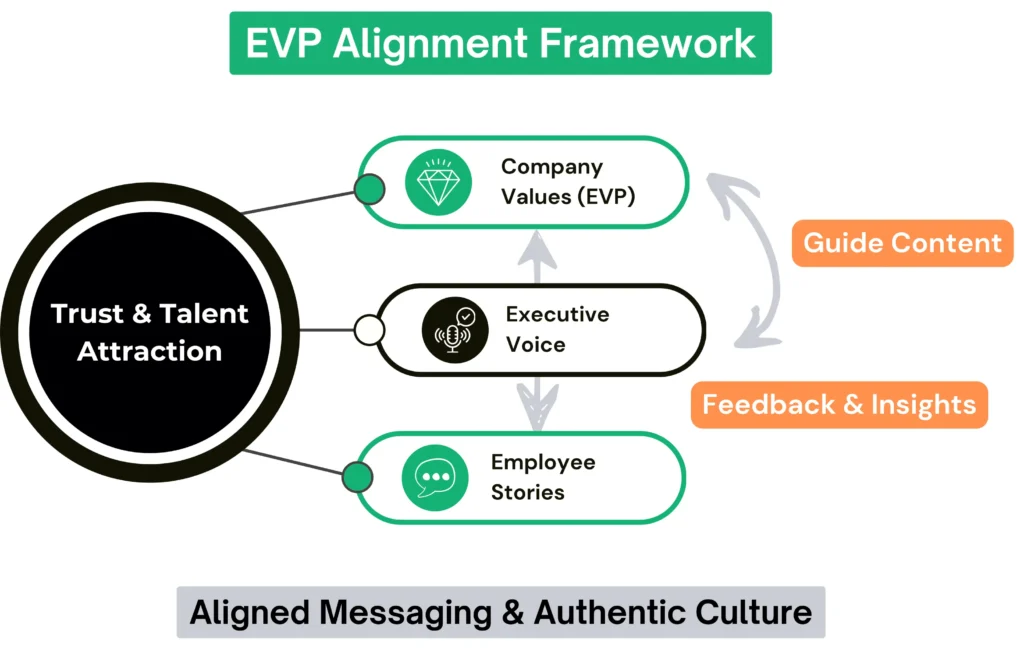
This is the tension between corporate and personal branding. Corporate branding is mainly what you believe, while personal branding shows if you are living what you believe in. When those two are misaligned, your employee value proposition (EVP) sounds more like a slogan rather than a reason to join (or stay).
Step 1: Start with Employee Value Proposition
Before asking anyone to post, comment, or share, you need clarity around your EVP. Most companies fall short here. Too often, EVPs are just flashy words: “collaborative,” “fast-paced,” “innovative.” Nice words, but meaningless to a candidate evaluating your company.
A strong EVP can decrease employee turnover by 70%. It should answer questions like: Why would someone want to spend three to five years at your company? What do they gain beyond salary? Which behaviors are rewarded? What type of person thrives in your culture?
Define three to four clear pillars that talk about your company’s culture and operational style. These pillars must show up in your executive posts, employee stories, and hiring communication. Because if your EVP lives only on your website, it’s dead.
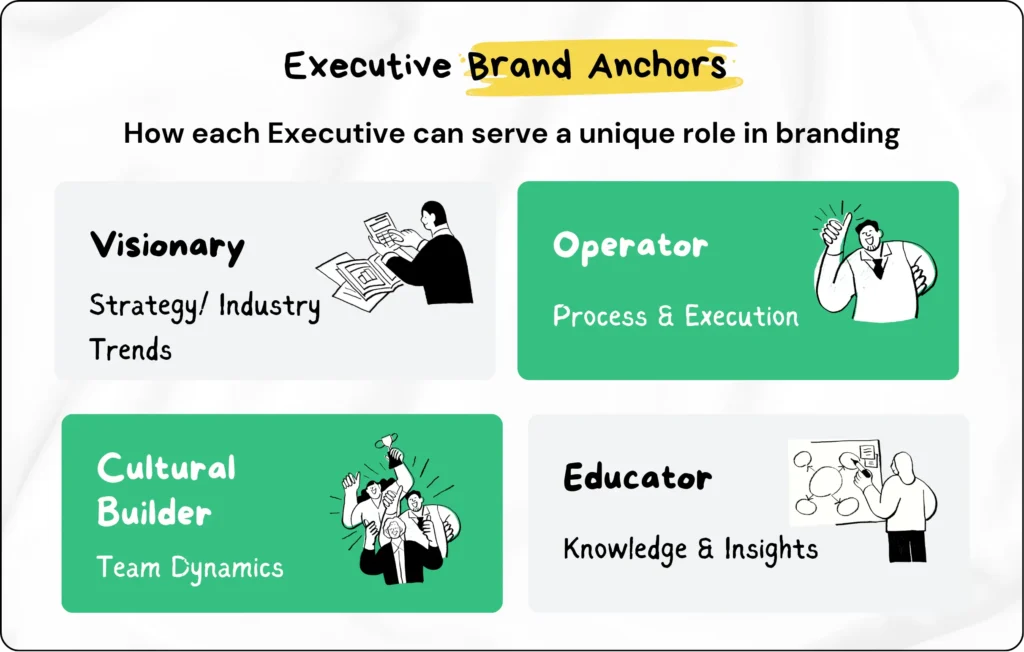
Step 2: Turn Executives into Brand Anchors
Yes, your concerns are valid that executives might post too often, say the wrong thing, or appear too personal. But actually, it’s the human faces that build trust far faster than logos or slogans.
LinkedIn data, specifically in America, shows that content from individuals consistently receives five times more engagement than company pages. When leaders share insights regularly, brand recall improves, and credibility rises, for both candidates and clients. We are not saying that executives start treating their account like influencers, but make sure you can put across your narrative in a way that people resonate with it.
When leaders communicate consistently within their anchor, your employer brand gains credibility automatically.
Step 3: Create LinkedIn Branding Guidelines
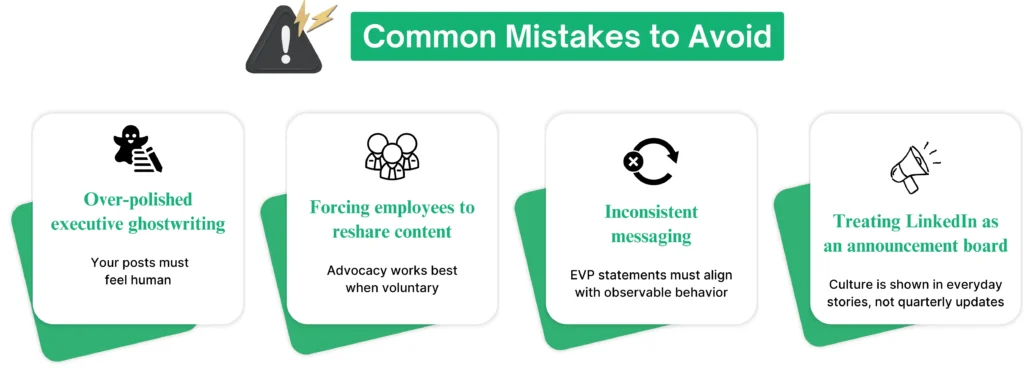
Forcing employees to post specific messages or resharing content makes it so monotonous. Instead, what you can do is provide light branding guidelines, like guardrails, not scripts.
These might include:
- Tone principles (professional but approachable)
- Content pillars employees can contribute to naturally
- Visual guidance for profile banners, images, and headlines
- Hashtag strategies aligned with EVP
- Topics to avoid
When employees understand the company’s values and feel safe sharing their experiences, people connect with this authenticity.
Step 4: Activate Employee Voices
A huge mistake companies make is trying to manufacture employee advocacy. Templates, scripts, or mandatory resharing programs almost always backfire.
You can give them topics or prompts that encourage natural storytelling. Some basic questions that you can begin with:
- “What’s a project you’re most proud of this quarter?”
- “What’s something you learned recently that surprised you?”
- “What’s a mistake that taught you something valuable?”
By giving employees the freedom to tell their stories within these prompts, your brand stops feeling like marketing and starts feeling like reality. Potential candidates scrolling through LinkedIn want to see more genuine experiences.
Step 5: Optimize the LinkedIn Page
Many companies make their LinkedIn Life page once and never touch it again, which is a missed opportunity. Your company page should function like a conversion page for candidates: a place where they can see culture, values, and opportunities.
Things you should talk about on your LinkedIn Life page are:
- Visual banners aligned with EVP pillars
- Featured employee testimonials and stories
- Clear “Why join us?” messaging
- Story-driven job descriptions instead of just lists of requirements
- Consistency across leadership and employee profiles
The LinkedIn Life page optimization ensures candidates get a sense of the company culture before they even reach out, which increases engagement and ultimately, retention.
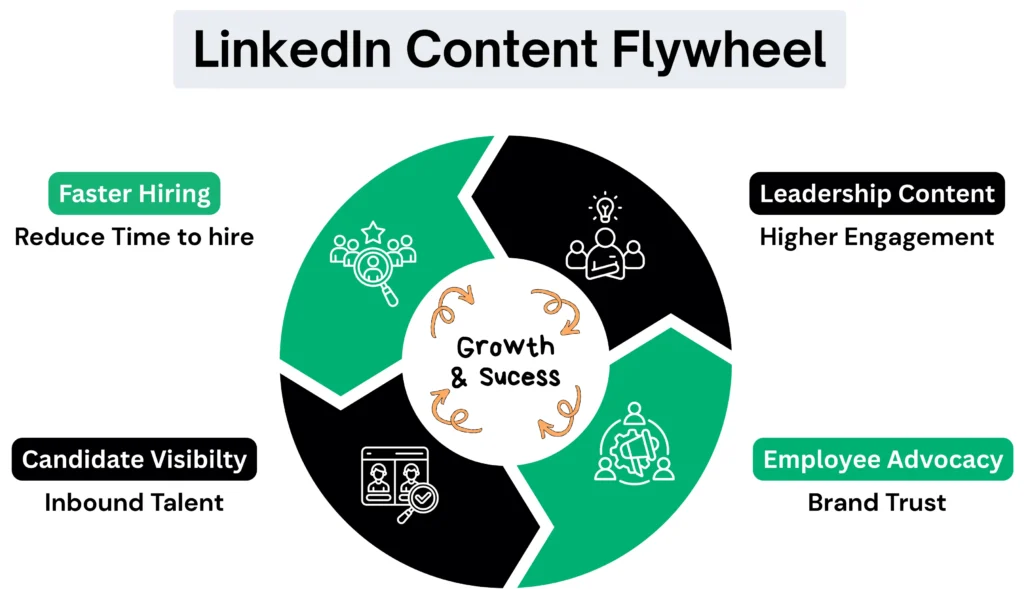
The Flywheel Effect: When Branding Supports Sales Too
According to a LinkedIn survey, a strong employer brand can increase the company’s referral rates by 51%.
Along with hiring, good employer branding can help your whole business grow. When leaders are visible on LinkedIn, it builds credibility. When employees share their knowledge and expertise, it shows that the company can deliver. And when your culture is open and visible, people start to trust you more.
This trust matters equally to potential clients, investors, and partners. A strong LinkedIn presence creates a chain reaction: more visibility builds trust, trust attracts talent, talent drives performance, and strong performance makes your company even more visible. Once this cycle starts, it keeps growing on its own and benefits the whole organization.
Build a System
You could be posting consistently, but if it’s about the day-to-day things like your pet’s birthday or the US Republic Day, though it holds importance to you, it will not be considered a strong employer brand. Treat it more like a system where you talk about your company values, leaders, employee stories, and a company presence that carries it all together. When you get this right, hiring becomes faster, and people start trusting your company more.
When people look to join a company, they don’t come for the logo. It’s the story behind what they believe in. And when those stories show up consistently on LinkedIn, you get the right candidates faster and more efficiently than ever before.
If you want help bringing your brand story to life and making LinkedIn work harder for your business, BPO Wizard’s marketing services can guide you every step of the way.
FAQs:
Corporate branding focuses on the company’s official page, values, and messaging, while personal branding is more focused on the voices of executives and employees. The best strategy is to combine both.
Employee Value Proposition (EVP) defines why people should work for your company. When you showcase it through your LinkedIn branding and employee stories, EVP helps attract candidates who resonate with your culture.
Employer branding is how the company presents its culture and reputation. Employee branding is how staff, especially executives, share the company’s story through their own profiles.
Employer branding in HR is how a company promotes itself as a great place to work. It highlights culture and EVP, which then helps attract and engage the right potential candidates while reducing hiring costs.