

Table of Contents
Recruitment Process Outsourcing RPO is a tailored business solution for companies struggling to acquire top talent while maintaining focus on core business operations and managing resources effectively.
60% of companies that want to enhance the quality of their hires and recruitment process believe partnering with an RPO services provider can help them achieve this goal.
~ A survey by SkyQuest.
As businesses compete to find qualified talent amidst the challenging economy and evolving hiring trends, the importance of recruitment process outsourcing cannot be ignored.
This guide provides a roadmap to understand, implement, and benefit from the Recruitment Process Outsourcing in 2026.
What Is Recruitment Outsourcing? RO Basics
Recruitment Process Outsourcing is a business partnership where a company delegates some or all of its recruitment tasks to an outsourcing provider. This partnership allows businesses to leverage the resources and expertise of the outsourcing firm to enhance their hiring strategies. In addition, recruitment agencies can speed up the hiring process, improve the quality of hires, and cut down on costs by partnering with an RPO provider.
How Does Recruitment Outsourcing Work?
Unlike traditional recruitment approaches, outsourcing providers work closely with the company’s HR processes to offer comprehensive services. The RPO provider handles job profiling, candidate sourcing, interviewing, and onboarding on behalf of its client company. Companies can refine their recruitment practices by utilizing the RPO provider’s recruitment tools, technologies, and data analytics.
Responsibilities of Recruitment Process Outsourcing Firms
The responsibilities of the RPO firms include:
- Effective candidate management to bring in high-quality talent.
- Strategic sourcing methods to attract top candidates.
- Dealing with compliance and risk management.
- Consultancy on employer branding to enhance brand image and improve the candidate experience.
- Generating recruitment analytics reports and conducting pre-employment screening.
Benefits of Recruitment Process Outsourcing
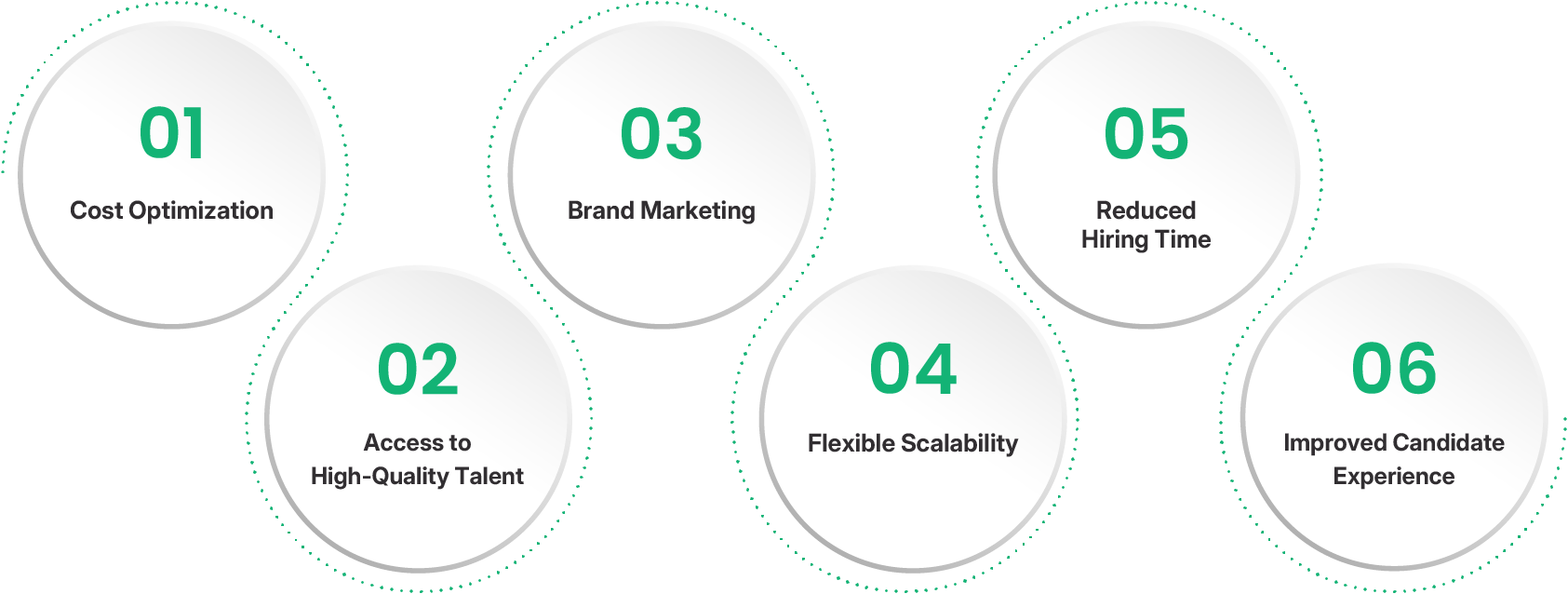
Teaming up with RPO vendors offers more advantages than just filling vacant positions. Let’s discuss the benefits of RPO for small businesses:
Cost Optimization
One major benefit of collaborating with an RPO company is cost-effectiveness. Unlike larger organizations that have significant talent needs, small businesses may not require a full-time, in-house recruitment team.
Additionally, their budget constraints might not allow for such expenses, given the lower volume of hires. RPO services offer a financially prudent solution, enabling businesses to access the advantages of a remote recruiter tailored to their specific needs without the need to manage in-house teams.
Access to High-Quality Talent
Since RPO providers have extensive experience in sourcing qualified candidates, they can help you attract top talent regardless of background and location.
Furthermore, partnering with such companies provides you with access to a full talent pool or pipeline to tap into whenever a new vacancy is created.
Brand Marketing
Since RPO companies use their employer brand to source candidates and perform job marketing functions, they have the experience and resources to assist in marketing the employer brand. This is particularly important for small-size businesses looking to access qualified candidates who do not have the necessary budget to support brand marketing.
Flexible Scalability
For small businesses, with fluctuating talent needs, there may be times when multiple hires are necessary, and others with no hiring need for several months. RPOs can scale up and down to meet varying recruitment needs without the cost associated with maintaining an in-house team that may be swamped some months and have minimal work during slower periods.
Reduced Hiring Time
Recruitment Process Outsourcing (RPO) can reduce your workload by as much as 55%. In addition, RPO improves the overall recruitment process. RPO vendors have a qualified team of experts who understand the intricacies of the competitive talent market. They use advanced technologies and recruitment methods to quickly secure top talent to help you stay ahead of your competitors.
Improved Candidate Experience
RPO companies can automate and optimize recruitment processes based on your needs. Additionally, they tailor job portals to create relevant and clear job descriptions, improve candidate interaction, eliminate obstacles, and simplify the application for candidates.
Moreover, RPO providers facilitate communication between employers and applicants, quickly address queries, and maintain transparency throughout the hiring process. This enhances the candidate experience and builds a favorable employer brand image.
Real-Time Reports and Analytics
Another advantage of recruitment process outsourcing is the generation of real-time reports and tracking metrics. This strategy helps you make informed and data-driven decisions for future audits. Opting for RPO solutions offers recruitment agencies readymade resources and the opportunity to optimize their staffing process.
Types Of Recruitment Process Outsourcing
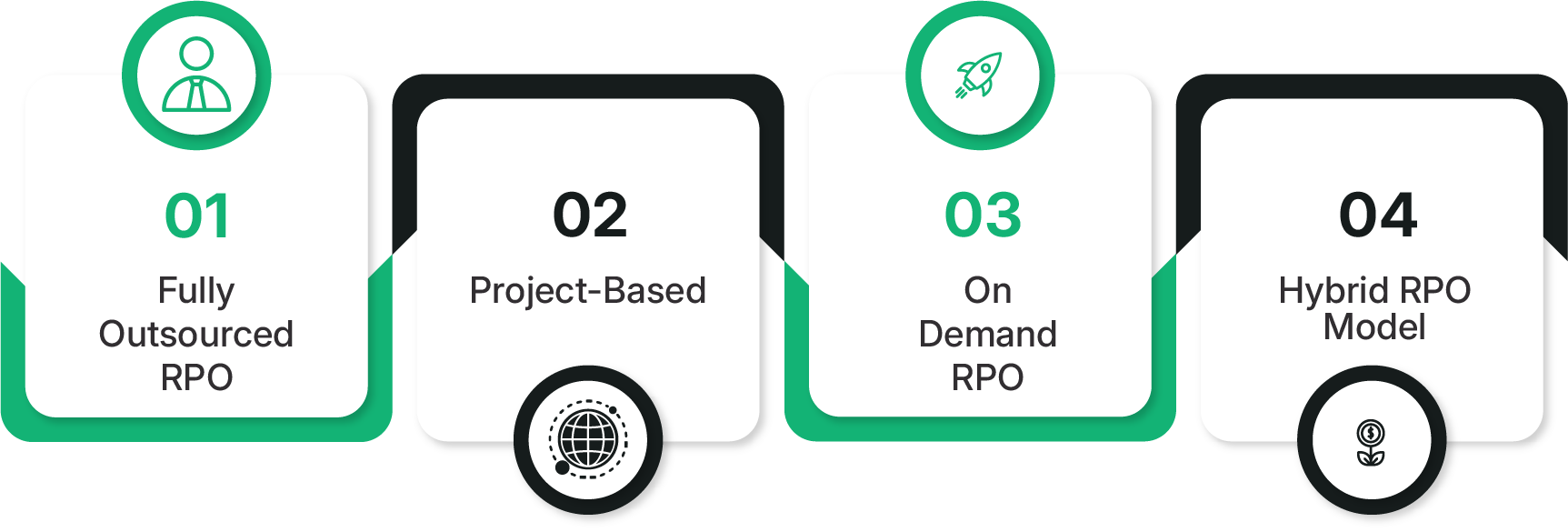
Recruitment process outsourcing has distinct service models customized to various hiring needs. These service models offer flexibility and scalability in talent acquisition.
Fully Outsourced RPO
The fully outsourced RPO model involves outsourcing the entire recruitment process to the RPO company. The provider takes complete responsibility for the end-to-end hiring process, including candidate sourcing, screening, interviewing, and the final hiring.
Given the complexity of the recruitment process, managing the entire process can be challenging. However, outsourcing offers a comprehensive solution where the RPO provider handles all tasks while offering cost-effective and efficient hiring outcomes.
Project-Based RPO
Like full RPO, project-based RPO involves outsourcing the entire hiring cycle but for a specific duration or project. This model is specifically utilized to handle immediate hiring spikes or to support staff projects without overloading the internal HR department.
In addition, it enables recruitment agencies to quickly deploy recruitment expertise and resources to fill multiple positions within a specified timeframe to ensure operational continuity.
On-Demand RPO
On-demand RPO offers organizations access to recruitment services without requiring a long-term commitment. This RPO model is suitable for businesses with fluctuating hiring volumes, allowing them to utilize recruitment expertise on a short-term or on-demand basis. It enables organizations to scale their recruitment efforts up or down as per current demand, enhancing the capabilities of the internal team without changing the hiring process.
Hybrid RPO Model
The Hybrid RPO, also known as Contingent RPO, is a collaborative recruitment approach. In this model, the RPO provider takes responsibility for certain aspects of the recruitment process while the business retains control over others. This model is particularly suitable for businesses requiring assistance with specific recruitment tasks, such as candidate sourcing and screening. The RPO vendor only oversees the recruitment tasks that the client business needs help with. The remaining aspects are handled by the recruitment business.
Recruitment Outsourcing Trends to Know in 2026
In 2026, more companies are using RPO partners to stay competitive, save time, and improve hiring results. Here’s a breakdown of the top trends reshaping recruitment this year:
1. AI Is Speeding Up Hiring
AI and automation are helping recruiters do more in less time.
- AI filters resumes using skills and keywords
- Chatbots answer candidate questions and schedule interviews
- Machine learning predicts who’s likely to succeed
RPO providers use these tools to cut hiring time and enhance quality.
2. Data-Driven Recruiting Is the New Standard
Hiring based on guesswork is over. RPOs now use data to make every decision smarter:
- Shows where hiring gaps exist
- Tracks time-to-fill and cost-per-hire
- Compares market pay and talent availability
With better data, companies can hire faster and smarter.
3. Upskilling Is a Bigger Priority Than Replacing
Instead of hiring new people, companies are training their current teams. They do so by spotting skill gaps, building training programs, and supporting internal promotions. This saves money and keeps top performers around longer.
4. Short-Term RPO for Quick Hiring Needs
Companies that just need help for a few months are opting for project-based RPO. This RPO model:
- Scales up or down easily
- Costs less than full-service models
- Fills roles quickly
In addition, it is great for seasonal spikes or specific hiring pushes.
5. Hiring Global Talent Is the New Normal
Remote work opened the door to hiring anywhere. Today, hiring across borders has become normal. By tapping into global talent pools, businesses gain access to a wider range of skills and fresh perspectives that aren’t always available locally.
In many cases, hiring internationally also helps reduce costs as some regions like Pakistan, the Philippines, and India offer highly qualified professionals at lower rates. RPO providers make this global reach easier by handling international sourcing, compliance, and onboarding, so businesses can expand without the usual hassle.
6. Augmented Reality Makes Remote Onboarding Better
New hires often feel disconnected when remote. AR helps fix that through:
- Virtual office walkthroughs
- Interactive training modules
- Live support using AR tools
It’s a fresh way to make remote hires feel part of the team.
When Should You Outsource Your Recruitment Process?
As your business expands your hiring needs may fluctuate, making outsourcing recruitment a promising approach to handle the shifting challenges and achieve successful hiring outcomes.
Here are signs that can help you determine if recruitment outsourcing is the ideal solution for you.
Limited Time and Resources
“On average, talent acquisition professionals spend up to a third of their time sourcing candidates for a single position.”
Posting job ads, screening resumes, conducting interviews, and overseeing the entire recruitment process can be labor intensive, particularly when you have:
- Multiple positions to fill
- Tight deadlines
- Lack of a qualified HR team
If these internal recruitment tasks are consuming significant time and resources or diverting your attention from core business operations, it’s wise to consider outsourcing your recruitment.
Lack of Recruitment Expertise
Recruitment requires specialized skills and expertise to effectively identify, attract, and evaluate top talent. If your internal team lacks industry experience or knowledge, it may lead to subpar hiring decisions or missed opportunities to secure the most qualified candidates.
High Employee Turnover Rates
Frequent employee turnover can result in substantial costs for businesses, including lost productivity, increased recruitment expenses, and diminished morale among remaining staff members.
A high turnover rate indicates that the recruitment process is ineffective in identifying and retaining the right employees. Outsourcing your recruitment to experts can assist in implementing advanced screening and selection processes to reduce turnover.
Difficulty Reaching the Right Candidates
If you’re struggling to attract the right candidates despite extensive efforts, it’s time to consider recruitment process outsourcing.
“Finding qualified candidates is the primary hiring obstacle for 70% of employers.”
RPO providers have access to broader talent pools, networks, and job boards, enhancing the likelihood of identifying qualified candidates who may not be actively looking for job opportunities.
Recruitment Process Outsourcing Global Trends
The global RPO market size was valued at USD 6098.9 according to 2023 research. The RPO industry is expected to grow at a CAGR of 6.62%, reaching USD 8959.65 million by 2027. It is essential to stay updated on the emerging RPO trends to gain an advantage in your recruitment strategy and talent acquisition efforts. Here are the key RPO market trends to look out for in 2026:
Candidate-Centric Recruitment
Instead of the traditional employer-centric hiring that focuses on filling vacancies, RPO agencies now prioritize delivering exceptional candidate experience. This shift in focus toward candidates enables your chosen recruitment process outsourcing RPO partner to enhance your employer brand and organically attract prospective employees.
In addition, the trend of candidate-centric recruitment is expected to grow further with the integration of advanced technological tools. For instance, the use of AI and automation to streamline applications and offer quick feedback will contribute to candidates’ positive experiences and benefit your organization.
Focus on Candidate Care

Candidate care is one of the latest trends in RPO which involves how recruiters interact with candidates and past hires. While most recruiters work closely with their candidates’ others don’t. However, remote recruiters from outsourced firms are trained to maintain professionalism in their interactions. They are adept at connecting candidates with jobs that align with their skills and work preferences.
Adoption of Next-Generation Technology
Another prominent trend in RPO is the adoption of next-generation technology. With the growth of Software as a Service (SaaS) companies, the outsourced recruitment industry is capitalizing on emerging and established technologies, including applicant tracking systems (ATS), various job boards, and websites. RPO vendors all over the world are adept at utilizing these technologies, recognizing them as invaluable assets for hiring top talent.
Diversity, Equality, and Inclusion (DEI) in RPO
The significance of DEI cannot be overlooked in maintaining a positive workplace. It promotes a fair, inclusive, and functional system, essential for a thriving workplace. In addition to creating an equal employment opportunities (EEOs) policy, DEI measures ensure protection for all individuals within the organization.
Moreover, diversity, equality, and inclusion will continue to be a top priority in the evolving workplace environments. This means that RPO companies will aim to develop strategies that ensure diversity and inclusivity throughout the recruitment process. Furthermore, one of the ultimate objectives of RPO providers will be to reduce or eliminate biases in the hiring process in 2026.
Expansion of Global RPO Services
A global expansion of RPO services is expected, given the persistent trend of hybrid work arrangements in 2026 and the increasing need for robust DEI initiatives. This implies that companies that offer RPO services will actively seek talent pools worldwide.
Cross-border and offshore recruitment services will become suitable options for remote hiring of the right professionals to fill your vacancies.
Hybrid and Flexible Work Arrangements
While the COVID-19 pandemic is behind us, the work structures adapted during those years are expected to persist into 2026. Many organizations have transitioned to a hybrid work model, where employees are required to be physically present in the office only on specific days of the week.
During the remaining days, they switch to remote work and fulfill their responsibilities from the convenience of their homes. In response to this trend, RPO providers are expected to continue developing customized solutions tailored to companies that adopt this flexible workforce model.
Data-Driven Decision Making
Recruitment agencies will increasingly depend on technology to analyze historical data and offer actionable insights. By utilizing these tools, recruitment solutions will become more data-driven, enabling recruiters to make informed decisions and achieve better hiring outcomes.
Global Recruitment Advantage
RPOs have expertise in global recruiting and are poised to gain a competitive advantage as the demand for global talent grows. Overseas recruitment specialists have skills that are comparable, or even superior, then local headhunters.
Furthermore, they help foster a more diverse and inclusive workforce while guaranteeing the quality of skills, particularly for remote teams.
The Emerging Role Of Technology In Recruitment
Technology has significantly revolutionized the hiring processes, enabling organizations to attract top talent more effectively. Recruitment technology goes beyond improving efficiency and speed to enhance candidate experience and reshape the hiring landscape.
Here’s how recruiting technology has significantly increased the efficiency of various stages of the recruitment process:
Application Tracking Systems

The Application Tracking System (ATS) has become the cornerstone of modern recruitment practices. This is the technology recruiters use to expedite the candidate search process by automating the collection, storage, and analysis of candidate data.
ATS technology enables recruiters to effectively handle vast quantities of applications, and quickly identify top-tier candidates. This automation improves the efficiency and effectiveness of the hiring process, ultimately enhancing the overall recruitment experience.
Artificial Intelligence (AI) and Machine Learning (ML)
These modern recruiting technologies play a crucial role in intelligent automation and data-driven decision-making processes. The advanced algorithms enable recruiters to streamline various tasks and enhance overall candidate engagement. For example, AI-powered chatbots are increasingly utilized by recruiters to engage with candidates effectively.
These chatbots can handle common queries, schedule interviews, and provide timely responses, ensuring an improved candidate experience. Furthermore, Machine Learning algorithms help analyze extensive datasets, identify trends, and predict candidate performance with remarkable accuracy, leading to improved efficiency and precision in hiring decisions.
Video Interviews and Assessments
Modern organizations are no longer confined to traditional in-person meetings and tests. Hiring managers now utilize platforms equipped with video interviewing features to optimize their hiring processes. Video interview processes enable companies to save valuable time and resources, facilitating virtual meetings regardless of geographical barriers.
Furthermore, AI-powered video assessments offer a sophisticated method for evaluating candidate skills and cultural compatibility, providing valuable insights to build globally competitive, diverse, and inclusive virtual teams.
Analytics and Predictive Hiring in Recruitment
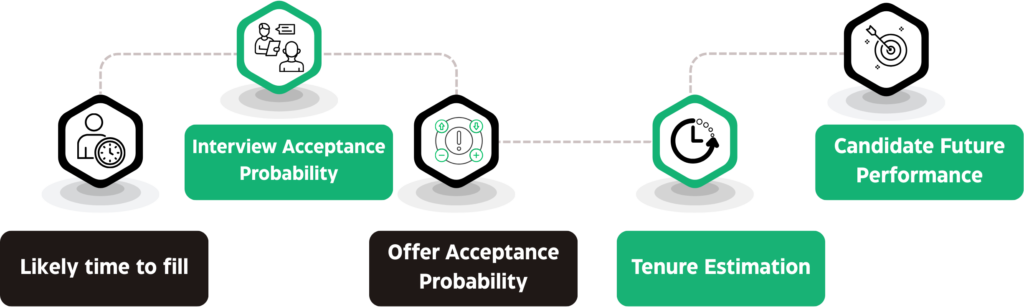
Recruitment analytics and predictive hiring are also essential components of the recruitment process. These technologies empower recruiters to recognize patterns, assess the success of their recruitment approaches, and refine their strategies for improved results.
Moreover, the use of historical data through predictive hiring models allows you to anticipate candidate performance and retention. This enables companies to select top candidates and enhance employee retention metrics effectively.
How Much Does RPO Cost?
RPO pricing models play a substantial role in helping companies plan and budget their recruitment expenses. Various types of pricing models are available, each with a distinct approach to handling recruitment costs. The common pricing structures and their pros and cons are discussed below:
Fixed Fee Model
The RPO or virtual sourcing provider uses a fixed fee structure for managing the entire recruitment process. This fee usually covers services, infrastructure, and expertise and presents a comprehensive approach to recruitment.
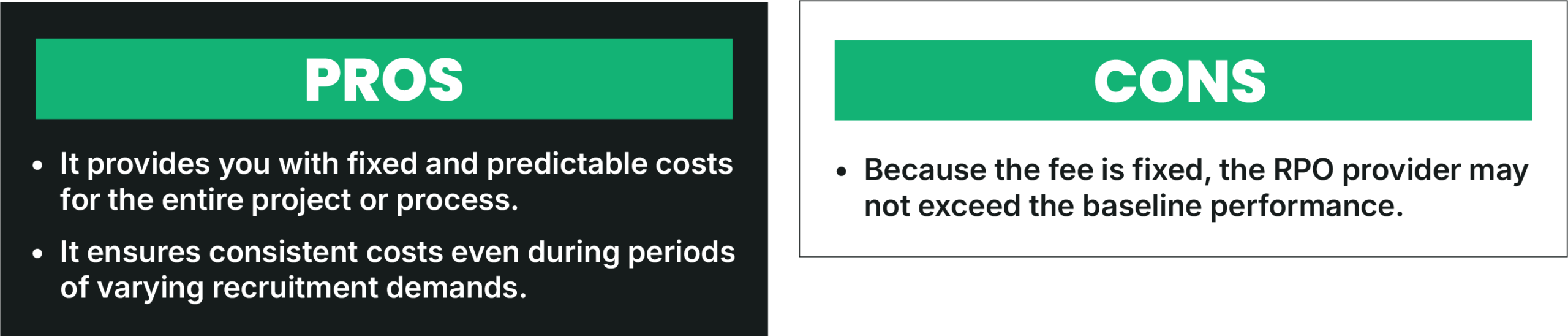
Cost Per Hire Model
A set fee is paid by the client for each successful recruitment made by the RPO provider. The fee per hire fluctuates based on factors such as job role, industry, and the number of hires required. Typically, the cost-per-hire model finds use in short-term RPO collaborations or project-based RPO arrangements.

Management Fee and Cost Per Hire Model
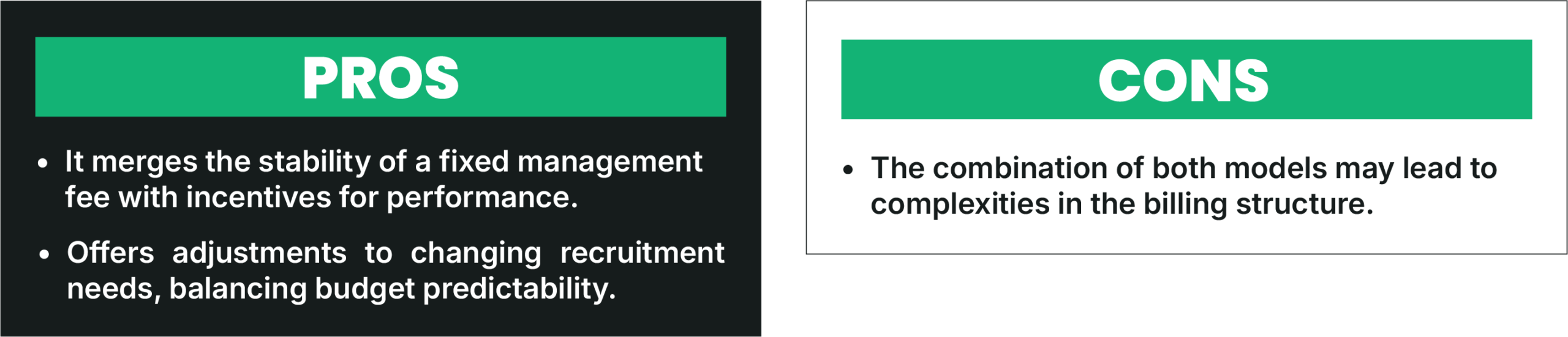
This model merges the fixed fee and cost-per-hire model. While the RPO providers charge a monthly fee for the management of the recruitment process, they also receive payment for each successful hire. The fixed management fee establishes a basic cost framework, and the variable cost per hire allows for adjustments based on changes in recruitment volume.
Cost Per Slate Model
In this approach, the RPO provider charges a fee for presenting a selection, or slate, of the most suitable candidates for a client’s vacant position. It is typically associated with project or short-term RPO arrangements.
The client’s HR team or internal recruiters manage the interview and selection stages once the virtual sourcing provider sources, screens, and shortlists candidates.

Cost Per Transaction Model
Under this arrangement, RPO providers charge for individual steps or transactions involved in the recruitment process, such as resume screening, interviews, or reference checks.
This model offers a detailed breakdown of costs, enabling clients to pay for particular services rather than the entire recruitment procedure.

Measuring RPO Success - KPIs to Track
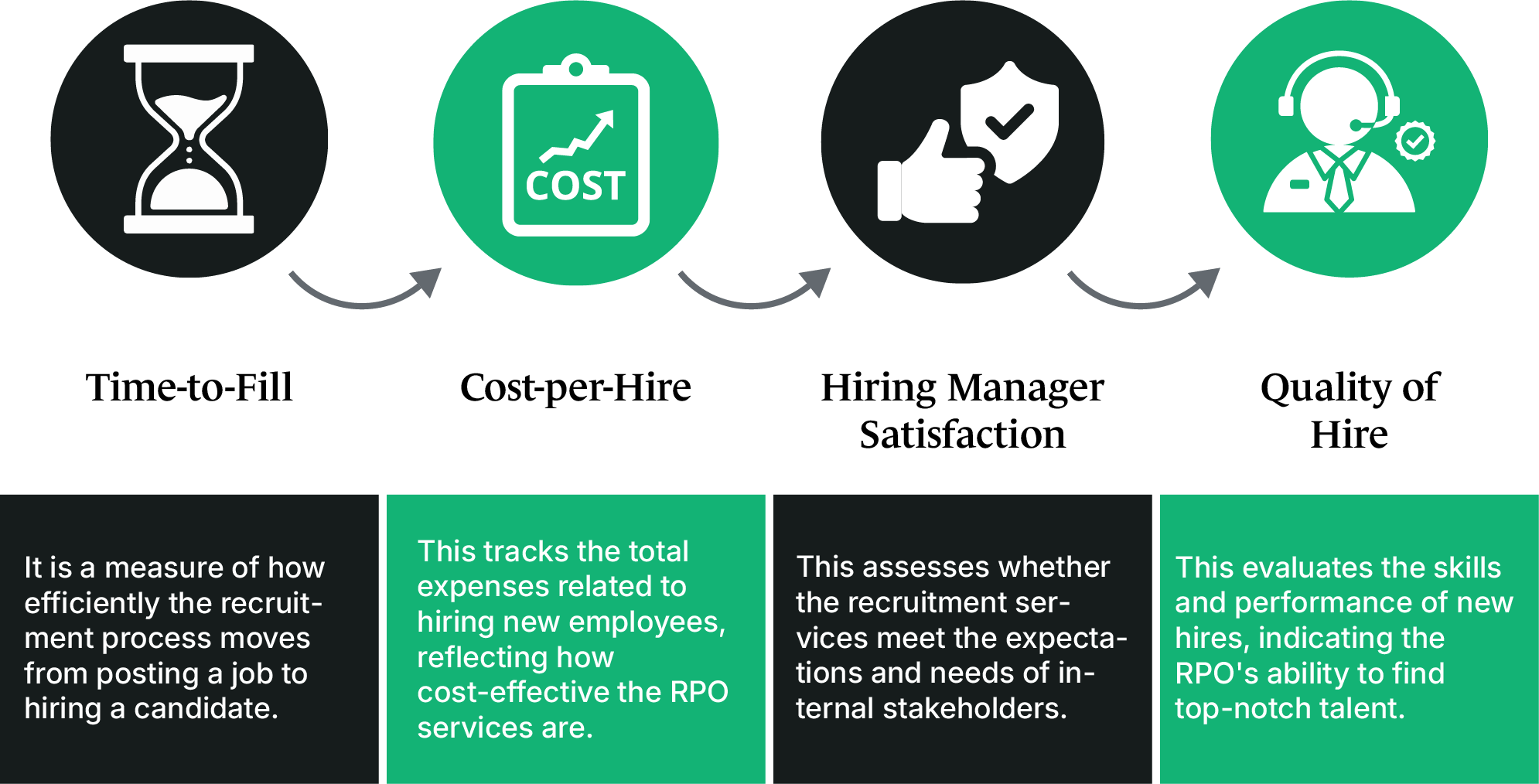
Efficiency and quality of the talent are the two essential factors to focus on when assessing the success of your RPO partner. KPIs play a substantial role in measuring the efficiency of the recruitment process.
Here are some of the key metrics you need to track:
Determining Long-Term Business Influence
The effects of Recruitment Process Outsourcing (RPO) on businesses extend far beyond immediate recruitment statistics. Evaluate the following factors to determine the long-term impact of the RPO partnership on your business:
Retention Rate
Retaining recruits over the long term indicates successful integration and satisfaction, highlighting the quality of hiring.
Business Agility
The ability of RPO to support organizational flexibility through workforce management indicates the strategic significance of the partnership.
By examining these aspects, companies can gauge the extent to which RPO initiatives contribute to achieving broader business objectives over time.
How to Choose the Right Outsourcing Partner?
Since outsourcing is a significant investment, understanding the key factors that make such a partnership attractive is crucial. Here are the key factors to consider when choosing an outsourcing partner:
Experience of RPO Provider
Assess the track record, case studies, and client testimonials to gauge the competence of the RPO firm. Collaborating with a company with extensive domain knowledge and relevant experience is advantageous as they can offer valuable insights and industry-specific skills necessary for your business’s success.
Scalability and Flexibility in Service
Prioritize scalability and flexibility when choosing an outsourcing partner for your project. As your company experiences a surge in growth or fluctuations in demand, the chosen vendor should be capable of adjusting resources and infrastructure to address the urgent requirements.
Financial Stability of the RPO Provider
A financially stable partner is more likely to invest in talent development, infrastructure, and innovation, establishing a mutually beneficial engagement.
Consider the following before making a decision:
- Financial performance
- Long-term growth strategies
- Customer retention rate
Evaluate Market Reputation
Check the history and reviews from past clients to evaluate the market standing of the RPO company. In addition, reach out to previous clients to gather firsthand experiences. Hire a recruitment process outsourcing partner only when thoroughly convinced of their positive market reputation and alignment with your business goals.
Scope of Service Offerings
Consider the range of services they offer, including end-to-end recruiting, candidate sourcing, and onboarding. Look for providers that tailor their solutions to match specific industry needs, ensuring they can address your unique requirements effectively.
Assess Technological Capabilities
Look for partners who utilize cutting-edge recruitment software, advanced applicant tracking systems, and data analytics tools to optimize the recruitment process. Leveraging such technology is an indicator of efficiency, shorten time-to-fill and the overall quality of hires.
Evaluate Cost and Return on Investment
While cost shouldn’t be the sole deciding factor, it’s essential to assess the pricing structure offered by each provider. Compare different pricing models, such as fixed fees, transaction-based fees, or hybrid models, to determine which aligns best with your budget and needs.
In addition, consider their ROI through their ability to reduce time and cost per hire, enhance candidate quality, and improve overall recruitment efficiency.
Quality of Talent Acquisition
The ultimate goal of partnering with an RPO service provider is to secure top-tier talent. Therefore, evaluating their ability to deliver high-quality candidates is essential. Look for providers who adopt proactive talent acquisition methods, comprehensive candidate screening, and rigorous assessment processes.
Request key metrics such as time-to-fill, candidate retention rates, and satisfaction scores to assess their effectiveness in talent acquisition.
Guide to Recruitment Process Outsourcing – Conclusion
Recruitment process outsourcing emerged as a transformative approach in the search for top talent, providing businesses with a streamlined and cost-efficient way to lighten their workload and focus on core business operations. RPO solutions not only address immediate recruitment challenges but also provide opportunities for long-term growth. It offers an invaluable solution for companies struggling to stay competitive, empowering businesses to attract, assess, and secure top-tier candidates efficiently.
Let BPO Wizard be your trusted partner in achieving your recruitment goals. Contact us today to learn how our RPO solutions can optimize your recruitment strategy and add more zeros to your revenue!