

Table of Contents
Most Private Attorneys General Act (PAGA) claims start with one small wage statement error that repeats every pay period. Recent reforms under AB 2288 and SB 92 now let employers cure technical or good-faith violations for penalties as low as $15 to $50 per pay period, down from the old $100 to $200. But defense fees, payroll audits, and back pay make these claims a serious financial risk, even with the lower caps.
PAGA settlements in California still total over $5.2 billion, with an average settlement of roughly $885,000, according to tracking data from the California Business and Industrial Alliance. A misclassified assistant or an unpaid lunch break is usually where the trouble begins.
If you run a recruiting agency in California, your back-office (sourcing, screening, scheduling, data entry) is where these errors usually start. Under California’s wage-and-hour rules, one uncorrected error can turn into a claim across every pay period.
This article shows exactly which back-office roles carry the most legal risk under California labor law and why more agency founders are building those teams offshore.
Why California Back-Office Roles Carry Outsized Legal Risk
Most recruiting agencies operate with fewer back-office staff. Sourcers, coordinators, and screeners are often the first hires after the founder and they are usually treated without a written contract or a clear job classification. That gap is exactly what triggers a misclassification claim.
The ABC Test Changes Who Counts as Staff
California’s AB5 law applies the ABC test to determine whether someone is an employee or an independent contractor. Under the California Department of Industrial Relations’ official guidance, a worker is presumed to be an employee unless the hiring entity proves all three of the following:
- The worker is free from the hiring entity’s control and direction in performing the work
- The worker performs tasks outside the agency’s usual course of business
- The worker is independently established in that trade or occupation
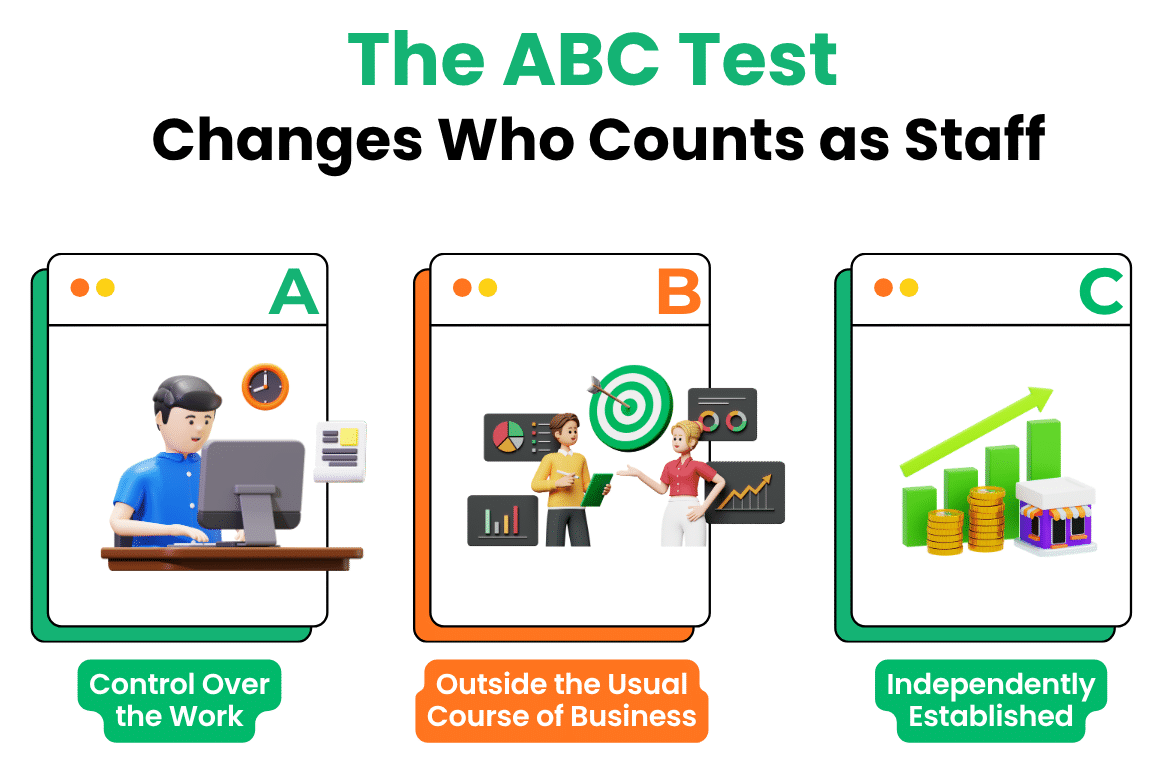
For a recruiting agency, this matters because back-office tasks like sourcing and screening are the agency’s core business. If a sourcer is paid as a 1099 contractor, but has fixed hours and reports to a manager, they’re legally an employee. That’s exactly what triggers a misclassification claim.
Overtime, Meal Breaks, and Wage Statements Are Full-Time Compliance Jobs
California sets stricter rules than federal law. Overtime starts after 8 hours in a single day, not just after 40 hours in a week. Meal and rest breaks are required, and employers must document them. Wage statements must list all specific details. If you miss any of these rules more than once, one complaint can turn into a PAGA claim and it will cover every pay period for every worker over the past year.
The Math Behind PAGA Exposure
Under Labor Code §2699, the default penalty is still $100 per affected employee per pay period for a first violation, and $200 for each one after that. But recent reforms under AB 2288 and SB 92 changed how much of that penalty an employer actually pays:
- Employers who take “all reasonable steps” to comply before receiving a PAGA notice can cap their exposure at 15% of the standard penalty.
- Employers who take those steps within 60 days of receiving a notice can cap it at 30%.
- Wage statement violations carry a reduced penalty of $25 per employee per pay period, if the employee could have easily spotted the error from the statement alone.
- Isolated, one-time violations with no specific penalty listed in the Labor Code are capped at $50.
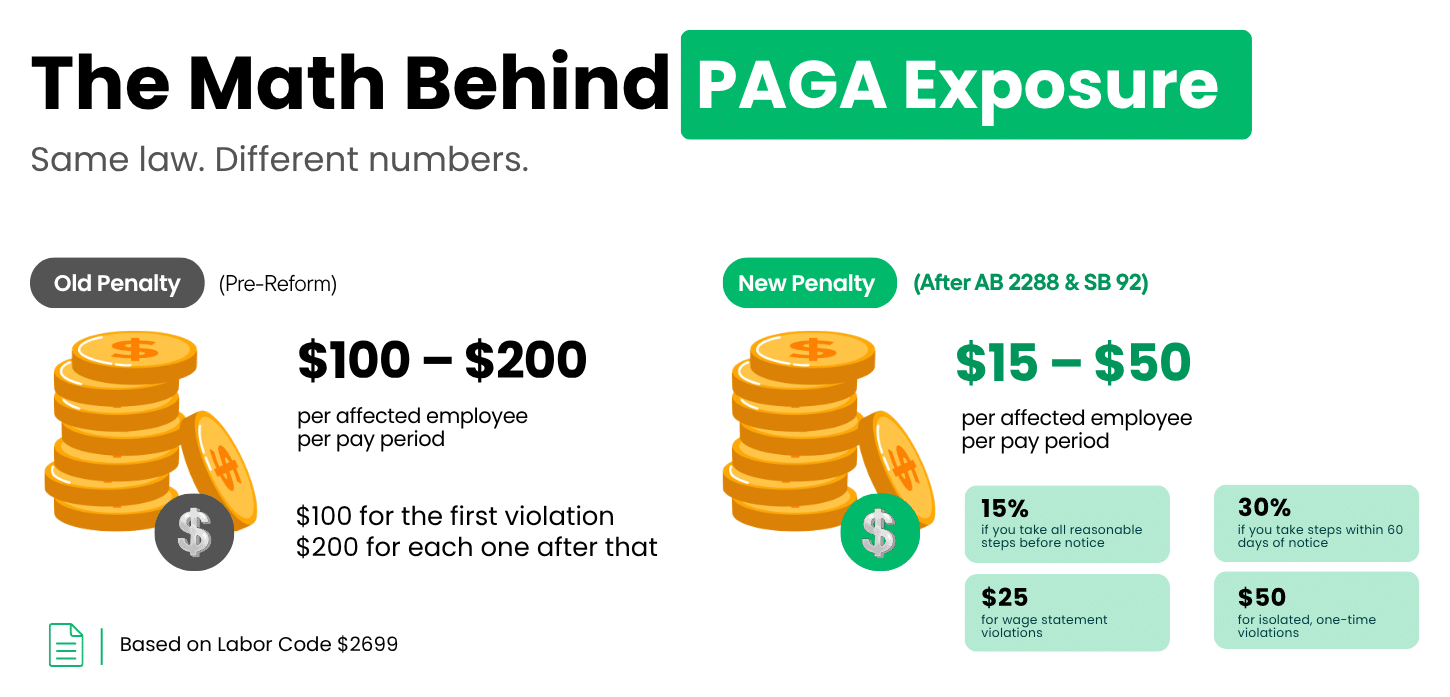
None of this makes PAGA exposure small. A small agency with 10 back-office staff, paid every two weeks, still faces 26 pay periods a year. Even at reduced rates, one uncorrected violation across a full year adds up fast, and the cure process still requires back pay, 7% interest, and reasonable attorney’s fees for every affected employee. Add payroll audits and legal defense costs while a claim is pending, and the math still moves from thousands to hundreds of thousands over a few years.
Where Remote Back-Office Support Changes the Equation
California agency founders are acting on this now. Sourcing, screening, scheduling, and research don’t need someone sitting in a California office. All it takes is a laptop and a shared workflow.
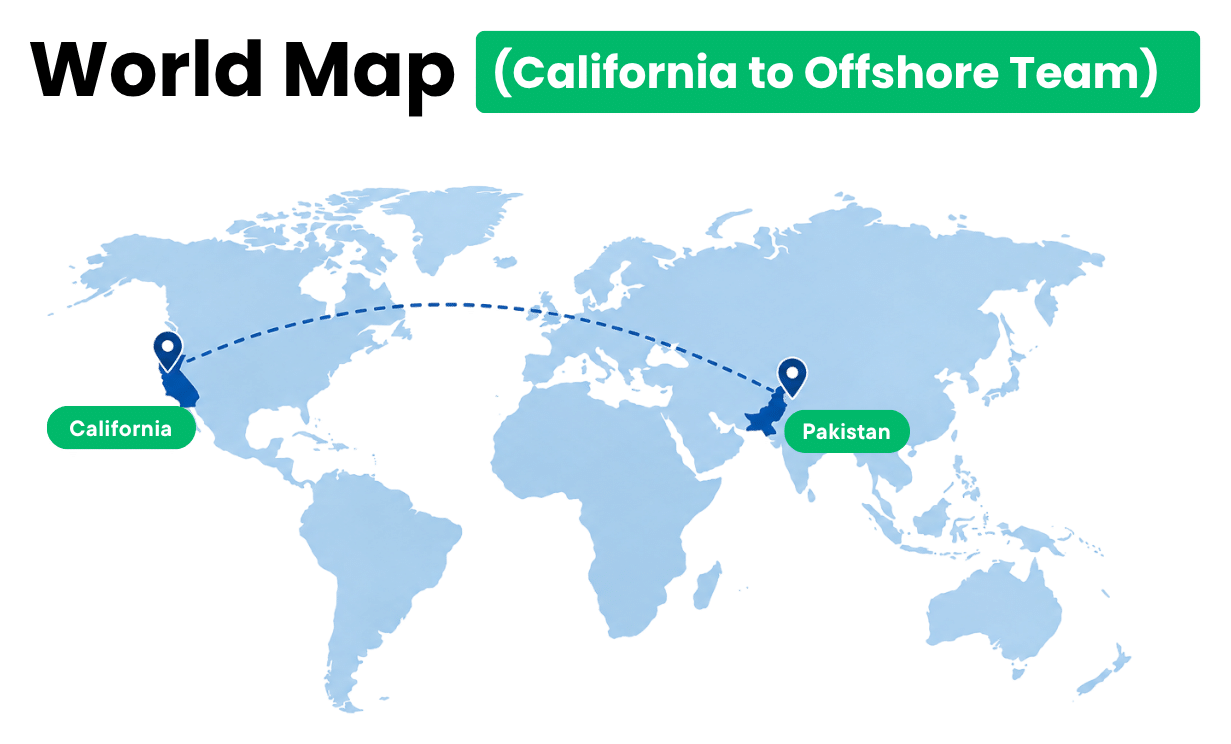
A California sourcer or coordinator on your payroll triggers AB5’s ABC test and opens the door to PAGA penalties. Structure an offshore team correctly, and that relationship becomes an international B2B services contract between your agency and an offshore provider or EOR. That contract blocks CA Labor Code and PAGA exposure from attaching.
The back-office work continues as before, but the misclassification risk doesn’t come with it.
What Changes vs. What Doesn’t
Moving work offshore doesn’t remove your CCPA duties. If the offshore team handles California residents’ data, it still needs a compliant data-processing agreement.
How to Structure an Offshore Back-Office That Actually Reduces Risk
Offshoring only reduces risk when you structure it properly. If you get it wrong, you create the same misclassification problem just in a different country.
Structural Choices That Matter
- Employer of Record (EOR) vs. Direct Contractor Agreements
An EOR is a company that legally hires the offshore worker on your behalf. They take care of local labor compliance and payroll. You don’t need to open your own office there. - Managed Pod vs. Piecemeal Freelancers
Hiring individual freelancers one at a time creates a patchwork of separate contracts with no single point of accountability if something goes wrong. A managed pod provider like BPO Wizard runs a dedicated team on your behalf that works inside your existing workflows while the provider handles day-to-day delivery and compliance. That structure keeps the relationship inside a single B2B services contract, which is what actually protects you from misclassification exposure.
A Practical Checklist Before You Move Work Offshore
- Confirm exactly what data the offshore team will handle, and confirm your agreement covers it.
- Pick your model (EOR or a managed pod provider) based on how much control you want.
- Define the tasks and deliverables in the contract. Skip the fixed hours and daily reporting.
- Check for working-hour overlap with California. Most offshore teams overlap several hours a day.
- Check your CCPA obligations separately. Going offshore doesn’t remove them.
What This Looks Like Once It's Running
Most agencies start with one function, usually sourcing or resume screening as both are repeatable and easy to track against a weekly target. Once that function delivers results, agencies expand the rest of the back-office.
Signs the Structure Is Working
When the offshore setup is done right:
- Results show up fast
- Work stays on schedule
- Local recruiters can focus on client work
- Legal risk gets smaller
- Cost savings happen too, but that’s a side benefit because the real goal is always reducing legal risk
Offshoring as a Risk-Mitigation Play
California agency owners who move sourcing, screening, and scheduling offshore take those roles out of AB5’s ABC test and PAGA’s penalty exposure entirely. Every back-office worker on your California payroll carries misclassification risk, and that risk grows with each pay period. Structure that same function offshore as a genuine B2B services contract, and there’s no California employee left for either law to apply to.
FAQs:
A: Yes. Offshoring back-office functions like sourcing, screening, and scheduling is legal and widely used. What matters is how the relationship is built, starting with clear scopes and the right engagement model.
A: Not necessarily. With a BPO arrangement, the vendor already operates and employs staff in that country, so you contract with them directly without registering your own foreign entity.
A: No. If the offshore team handles data belonging to California residents, like candidate records or client information, your CCPA obligations still apply. Offshoring changes labor-law exposure. It doesn’t change data-privacy exposure.
A: Candidate sourcing, resume screening, interview coordination, CRM and ATS data entry, and prospect research usually move first. These functions are process-driven, don’t need in-person presence, and don’t depend on local, real-time judgment calls.