

Table of Contents
At the start of the year, many businesses rush into hiring, new tools, and aggressive targets. But the companies that perform best in the long run pause first.
They step back to reassess what’s actually working, and what isn’t.
A strong business reset strategy for 2026 is about adjusting systems before growth pressure increases. Q1 offers a rare opportunity to diagnose gaps early, fix weak foundations, and prevent effort from being wasted later in the year.
It takes one to know one and that’s how we know, after 5 years of being into a business, what Q1 demands to fix first in hiring, operations, and growth so your business doesn’t stall halfway through the year (in this case, 2026).
Why Q1 Is the Best Time for a Business Reset Strategy?
Most companies treat Q1 as a launchpad, i.e. hiring faster, launching campaigns, setting stretch goals. It comes from the fact that every professional wants a better wrap up at the end of every year and that goes back to the revamped strategies at the beginning of the year.
However, every forward motion doesn’t mean progress.
So, Q1 should be a time to diagnose where your systems are weak before you add new pressure with growth initiatives. Otherwise, you will be stuck in loops, wondering why all the effort is not compounding.
If diagnosis is done right, you’ll end up with a solid foundation, ultimately reducing waste and making later growth predictable.
Starting with discovery ensures you don’t solve the wrong problems.
The Framework for a Winning Business Reset Strategy in 2026
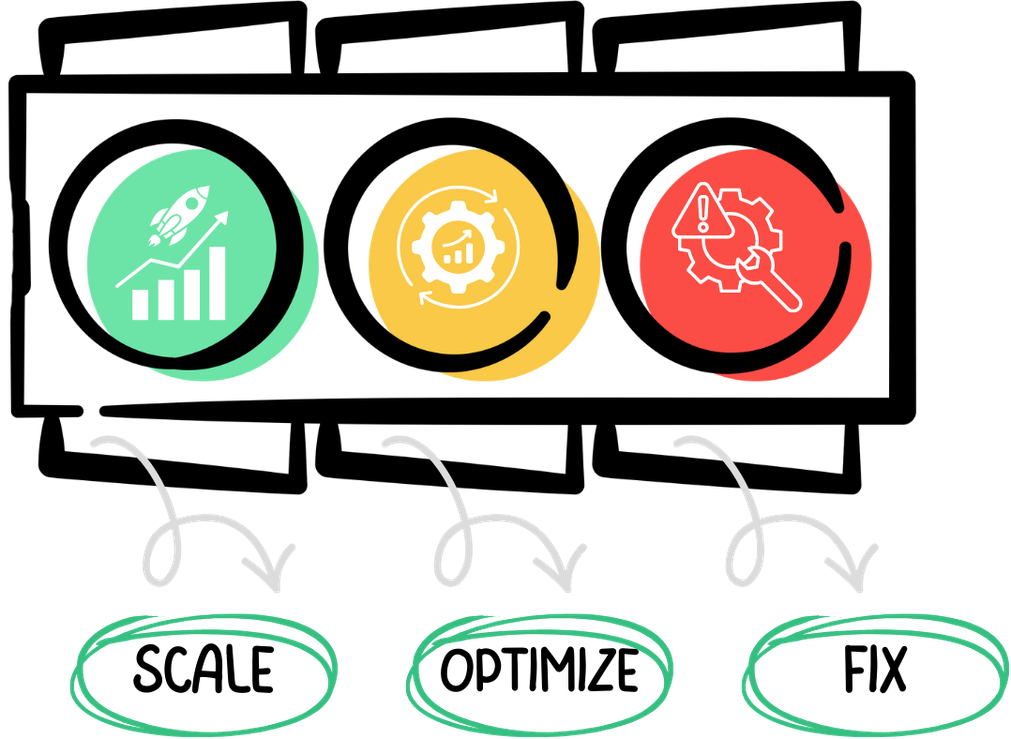
Let’s cut straight to a model that actually works when finalizing the business reset strategy built to move the needle:
Fix:
When you set a yearly goal, analyze what you couldn’t achieve at the end of the year and the reason behind it. It will help you detect your most fragile systems that you can stabilize first so problems don’t compound.
Optimize:
Stabilizing the fragile systems alone is not enough if you are not regularly maintaining and optimizing them. Even the smallest systems need regular check and balance and upgradation so that you stay ahead all the time.
Scale
Reaching one goal should only make you sort a bigger goal to chase. The best thing about fixing issues and optimizing systems is that you grow and take new steps with confidence when you’re building on stable ground.
If you scale before you’ve fixed and optimized, you’re just amplifying chaos.
Hiring Reality Check: What Businesses Must Fix in Their Hiring Strategy for 2026
In 2026, you can’t just post jobs and wait for a miracle to happen. You have to map out the whole strategy and SOPs before you put it out there.
Even the world’s most operationally mature companies are rethinking how hiring fits into growth. Amazon recently had massive layoffs, not due to poor performance, but to cut bureaucracy, flatten layers, and move faster.
If Amazon has to reverse hiring decisions to regain speed, smaller businesses can’t afford to ignore system fixes.
Traditional Hiring Is Broken
Old patterns like “post and pray” job ads are ineffective. Candidates, especially the top talent, move fast, and opportunities dry up quickly. It gives you less than a week to take steps and make the best choice before the pipeline dries up. What’s more concerning is that you won’t find top talent on the job boards; it takes a raw network to find it firsthand.
Speed Matters More Than Ever
It’s not always a lack of work that leads to the shrunken pipeline. Sometimes, it’s just that your system is broken and you already have enough on your plate. So, it results in slower response rates and follow ups.
Research shows top companies:
- Respond to applicants within 24-48 hours
- Simplify interview steps
- Give clear next steps to candidates
Slow hiring signals disorganization and causes loss of talent.
A Language that Talks to All
Vague job descriptions full of buzzwords repel candidates. In most cases, the job seems more complicated than it is when companies try to sound fancy. Honest roles with clear responsibilities and realistic pay expectations outperform fluff every single time. It signals that you know what real talent looks like and you have all the protocols ready to accommodate it.
Skills Over Degrees
Companies are shifting hiring criteria from rigid degrees to practical soft and technical skills. Honestly, it couldn’t have gotten any better. Even a Harvard graduate is not worth it if he is not good at communication, problem-solving, and adaptability, especially in uncertain markets. If a bullet point in your JD still reads “A bachelor’s degree in communication, journalism or related field” in 2026, you need to tweak things more than a little bit.
In fact, the current reports show that 94% of the employees hired on the base of their skills outperform the ones hired for their degrees.
Fixing Operations
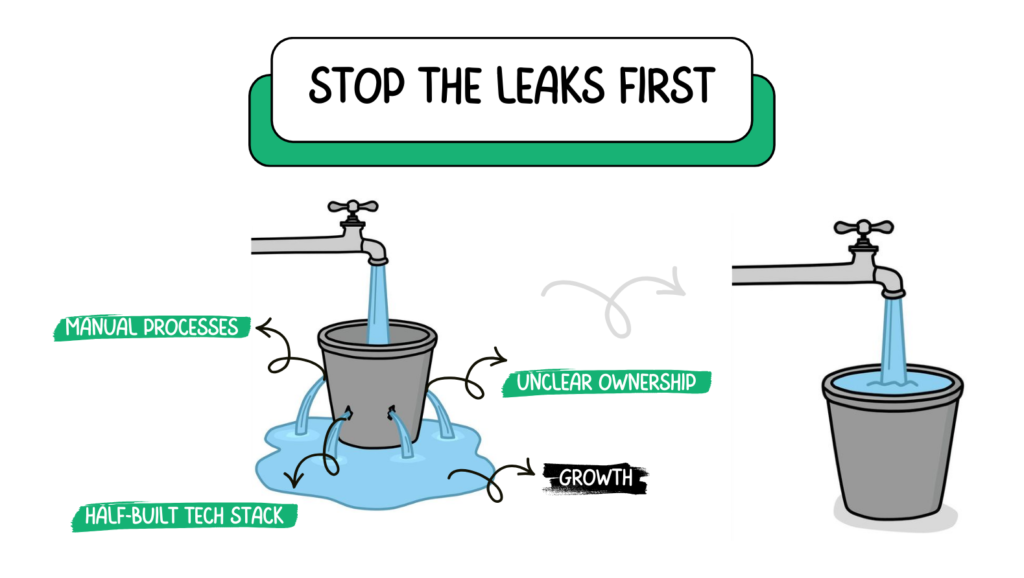
Being an operation manager surely sounds cool as they’re literally the backbone of delivery, service, and quality. But it doesn’t come easy. Everything that the light touches comes under the umbrella of operations management and fixing.
Here’s what most businesses get wrong, when it becomes a problem and how businesses can fix it:
Operations fixes might feel invisible, but they make growth repeatable.
Optimize Next:
Once the big leaks are fixed, it’s the time you maximize and double down on the best practices and fixed systems.
Standardize Workflows
Once you have figured out the proper workflows, the next step is to define responsibilities and set clear expectations for everyone. Standardizing the workflow across the teams ensures that the quality of delivered work stays consistent.
Track the Right Things
It’s time you move beyond vanity numbers and focus on predictive metrics such as cycle time, capacity, throughput, and quality. That’s what helps you set realistic goals and optimize workflows to achieve those with a solid foundation.
Sync Across Teams
Ensure communication isn’t an afterthought. When everyone knows the process and owns their part, your business gets faster without chaos. It gets messy when everyone is doing everything, so the proper coordination between teams ensures that there are no repeated efforts.
Scale Last:
Here comes the time to work for what people start expecting on day 1 of starting a business – business scaling up and beyond.
Once you have implemented systems, fixed shortcomings and put them under test to finally optimize the best, no one can stop you from scaling.
Scaling is about:
- Confidently increasing output
- Expanding markets
- Adding people or products without breaking systems
It sounds progressive when companies are adding more products and services to their offerings. But that being done without operational efficiency only adds long-term problems that could have been avoided with a proper system and gradual scaling.
Common Q1 Mistakes
Even experienced leaders fall into these traps:
Mistake #1: Hiring to Fix Systemic Problems
When processes are unclear, adding more people only spreads the confusion. New hires inherit the same gaps, decisions slow down, and output becomes inconsistent. In some cases, even the A-players slow down and sometimes even their top strengths weaken.
Mistake #2: Buying Tools Before Fixing Workflows
Software can’t fix broken workflows as they are created only to speed them up. When the underlying process is messy, new tools only speed up and double down on a broken system, causing much more damage.
Mistake #3: Ambitious Targets Before Capacity Planning
Ambitious goals look great on paper, but if your team and systems can’t support the workload, quality drops fast. Missed deadlines, burnout, and customer dissatisfaction follows in no time. Growth only works when capacity is planned first and if you are not doing that, any attempt at growth will just backfire.
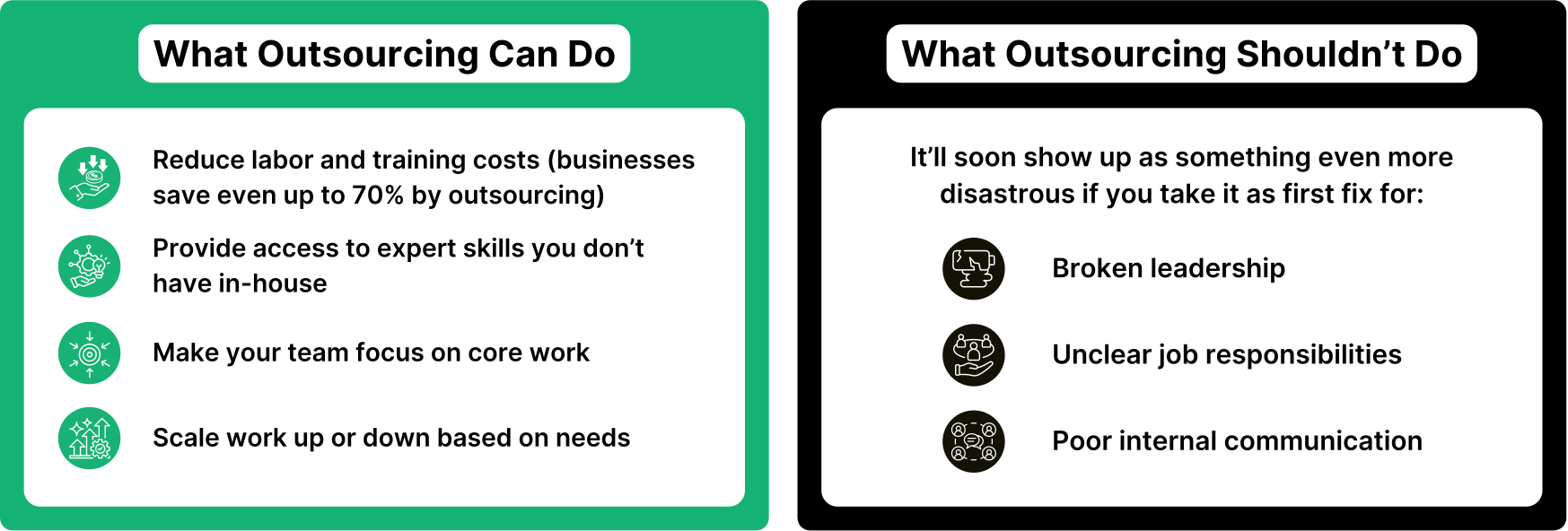
Outsourcing as a Strategic Stabilize
Outsourcing your work to reliable partners can definitely bring a relief, but it’s not the solution if foundations need to be mend. Let’s set the record straight, once and for all.
Practical Q1 Reset Checklist You Can Use Today
All in all, you need to fix only 9 things in Q1 to achieve unstoppable growth in the years to come. This checklist will help you track those in real time.
Hiring Reset
- Define roles before recruiting
- Shorten hiring timelines
- Create talent pipelines for future needs
Operations Reset
- Map your workflows
- Eliminate redundant tools
- Clarify ownership for key processes
Growth Reset
- Set realistic targets tied to capacity
- Align teams behind measurable KPIs
- Build a cross-functional execution plan
Growth sprints sounds good but Q1 is about understanding your business and its limitations well enough to sprint later without tripping. When you fix what’s weak, optimize what works, and scale only with confidence, you achieve a growth that’s built to last.
FAQs: Business Reset Strategy 2026
Q1 is ideal because pressure is lower and decisions made early affect the rest of the year. Fixing issues in Q1 prevents wasted effort, rushed hiring, and operational breakdowns during peak growth periods later in the year.
Stability comes first. Growth without stable systems amplifies existing problems. Businesses that fix processes and capacity issues before scaling achieve more predictable and sustainable growth.
Yes, but only as a stabilizer. There is nothing as rewarding as outsourcing when internal roles, ownership, and workflows are already defined.