Table of Contents
“Gen Z doesn’t want to work. They will quit within a week.”
“They can’t handle feedback.”
“Gen Zers seem rather lax and unmotivated. Often totally lacking in self-reliance and perseverance.”
If you had been listening to workplace podcasts or scrolling through Reddit, you must have heard these or similar phrases. It has been the prevailing narrative these days that Gen Z is a chaotic and unmotivated generation, and that this behavior will somehow undermine the age-old work norms.
What if they had all got it wrong? Let’s look at Gen Z with a fresher perspective, and then you can decide for yourself.
Who is Gen Z and why they’re rethinking work?
Born between 1997 to 2012, Gen Z is the first fully digital generation to join the workforce. They have grown up through economic recessions, global instability, a pandemic, and the rise of social media. Gen Z has witnessed burnout firsthand. So when you see them asking for flexibility, questioning outdated practices, or setting boundaries, it is all out of the thought to make things better and easier.
Gen Z is not here to break the workplace but to rebuild it. In this article, we will talk about some media-fueled stereotypes and see what Gen Z is actually bringing to the table.
The Gen Z Stereotype: Where it all Went Wrong?
It all started in good humour from talking about ‘lazy interns’ on TikTok, which gained weight with the LinkedIn posts about the ‘new kids at work these days’. Now headlines are talking about Gen Z as the fragile and chronically online generation. What started as fun has now become a stereotype.
The media and audience live off sensationalism. One viral news about Gen Z being less tolerant or someone quitting after a week, and all the weeks of work go down the drain. No one talks about how they are pushing for progress.
The older systems were built for different outcomes. Now, when the demands for results are different, so should be the work norms. So when Gen Z talks about changing what does not work, being flexible at work, and being more mindful of employees’ mental health, it is thought of as too fragile and entitled. It’s not that Gen Z is hard to work with.
They are more vocal about tolerating wrong things, and previous generations endured in silence. So instead of mocking them, try listening to them.
What Gen Z wants at work in 2026
Leaving aside what the headlines say, Gen Zers are actually looking for a healthy work environment, a place to grow, and their boundaries respected. A study conducted by McKinsey explored in detail what Gen Zers are looking for at work, and behaviours based on their expectations.
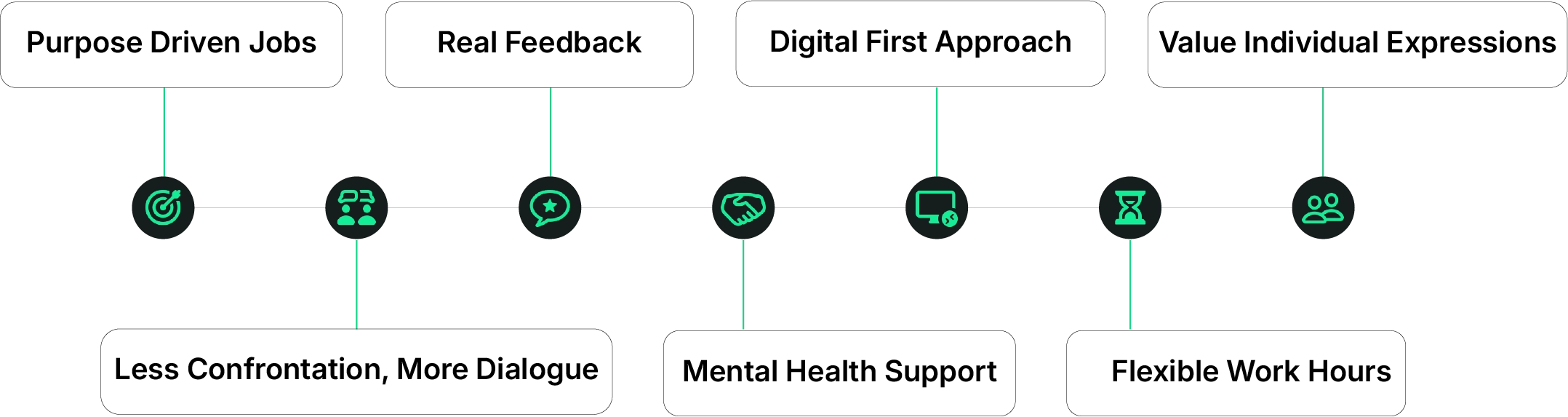
Purpose Driven Jobs
There was a time when your job title defined your prestige, but now Gen Z is changing the narrative. Around 89% of Gen Zers think that having a purpose to their work is what keeps them going. To them, simple job titles are not worth it until the work they do aligns with their values. Social impact and empathy are some things they actually feel themselves accountable for.
Real Feedback
Although it is the norm to have biannual and quarterly meetings in most offices but Gen Z wants more than this. Gen Zers want more transparent and real feedback. They ask for regular one-on-ones with their managers in a way that they are treated as collaborators, not subordinates.
Digital First Approach
Gen Z has grown up with technology. They know what works and what can make your work hassle-free. This is the reason they question the age-old practices to how they are inefficient or outdated. But a common answer to this is, “We have always done it that way.”
Only if the older generations are open to change. This digital-first approach will help in improving productivity, modernizing the processes, and reducing burnout.
Flexible Work Hours
When talking about how Gen Z is reshaping the work culture, Forbes has cited that around 60% of the Gen Z workforce thinks that having a work-life balance is a crucial factor in their job satisfaction.
It is also thought of as the most controversial thing when it comes to Gen Z work ethic is their not wanting to work the usual 9-to-5. Many older generations have tagged it as laziness or a lack of discipline. But in Gen Z’s defence, they don’t think that productivity is tied to the regular 9-to-5. Remote options and outcome-based performance are far more valuable than just clocking in.
Value Individual Expressions
For years, there have been traditional molds of professionalism in which every person is expected to fit in. Gen Z feels that there shouldn’t be such boundaries to how a person conducts themselves unless it is within the specific professional boundaries. They expect freedom in how they show up and feel comfortable instead of portraying a polished, conformist demeanor.
Less Confrontation, More Dialogue
Ten years ago, no employee would question their seniors’ decisions even if they knew it was wrong, because someone might flag it as disrespect. Now, Gen Z is vocal enough to talk about things that they feel are not right. They are not afraid to speak up, just because someone might regard it as a passive-aggressive approach. They want a transparent two-way conversation, staying within the respectful boundaries.
Mental Health Support
Mental health conversations and prioritizing it were treated as a perk until Gen Z put it forward as a baseline. Mental health is no more a trend to them. They have grown up in a high-pressure world where burnout is seen and acknowledged. More than half of Gen Z values mental health above wealth in the workplace. So mental health is a non-negotiable to them.
Now that we look at all these things that Gen Z wants, one can also see that they are their strengths, which employers often overlook. Instead of looking at them in a critical light, why not think of them as how they add to the workplace?
Now that I have gone back and read all these points again, it shows Gen Z with a perspective, and all these are actually portraying Gen Z’s strengths.
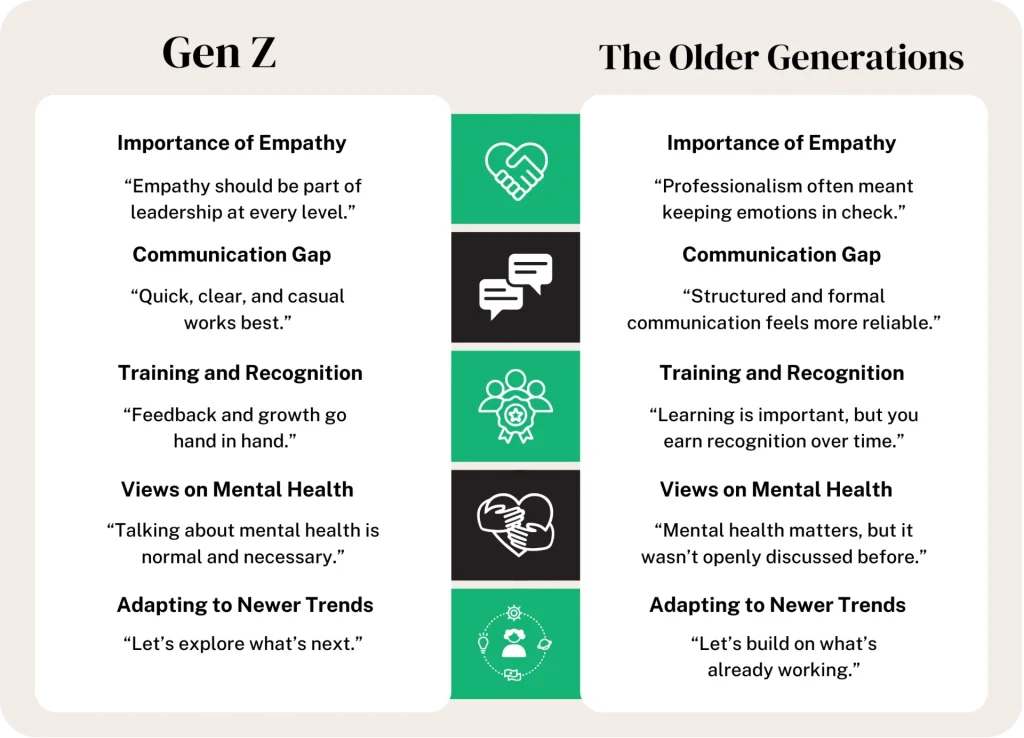
The Conflict: Gen Z vs. the Older Generations
How to Attract and Retain Gen Z Talent in 2026
Generational differences at work are a common sight; earlier, the focus was on hiring millennials, and now it’s Gen Z. Employers are responsible for making every employee feel welcomed and creating an environment that works best for all of them.
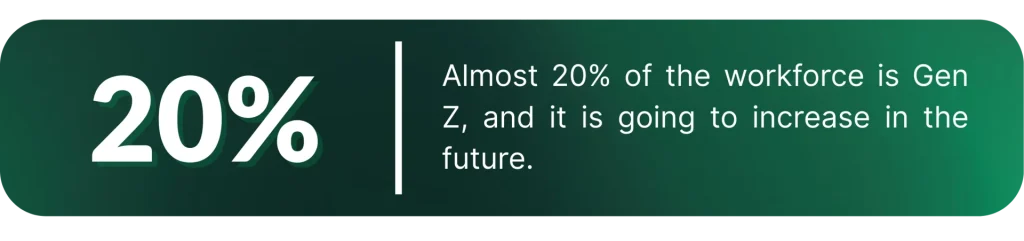
Here are some tips on what you can do to attract and retain Gen Z employees.
Improved Technology
Outdated tools and technology frustrate Gen Z, not because they are impatient but because these tools hamper productivity. So invest in tools that are user-friendly and improve productivity. The tools that make daily repetitive tasks faster not only get the work done faster but also keep employees from being distracted by the monotony.
Workforce Wellbeing
Gen Z talks openly about mental health and burnout, and they expect their employers to acknowledge that too. So instead of vague wellness talks, make sure your employees have access to therapy. Build a culture where you check up on your employees and be more aware of their emotional well-being at the workplace.
Diversity and inclusiveness
Though it has changed a lot but still in some places it is seen that biases are swept under the rug and not talked about openly. Gen Zers care so much about equity and representation. So create a workplace where everyone feels equally seen and heard. Your talent pipeline and executive positions should reflect this inclusivity.
Career Growth
Gen Z is not attracted to mere titles. They want a space that allows them to grow. So create a workplace that gives them space to grow and explore their options. The best way is to offer mentorship on how their roles will align with their future goals and what they can contribute to the bigger picture.
Flexible Work Hours
Gen Zers don’t want to stick to the specific 9-to-5 office hours. They believe that productivity isn’t bound by time boundaries. It might sound odd to you, but start by giving it a chance. Try it for a month. Give them remote options, hybrid or work from home, and then analyse the difference in productivity.
Bottom Line: A Mutually Beneficial Future
Gen Z isn’t here to dismantle the workplace; rather, they will add to it in ways that will make it better. Just because these ways aren’t the same as they were before doesn’t mean they are not right. Listen to their needs and embrace a more flexible and inclusive approach towards Gen Zers.
You will see that managing Gen Z employees is not as hard as you think. You just need to have a different approach to handling Gen Z talent. Give them a chance, and you will see this change is for the better. They aren’t lowering the bar; instead, raising it according to the 2026 work trends all over the world.
Gen Z talent is here to stay, and make sure your teams are ready for it. So, if you are looking for someone to help you find the best team that speaks Gen Z’s language, BPO Wizard can help you build teams that thrive now and in the future. Our RPO solutions are built for the modern workforce that will align with your culture and stay there in the long run.
Frequently Asked Questions
Gen Z’s need for change is often mistaken for entitlement. Actually, they’re against outdated systems and asking for a more purpose-driven workplace environment, which will benefit all generations.
Gen Z is motivated by purpose, recognition, and growth. They want to know their work matters, they are recognised and appreciated for their efforts, and the work contributes to their personal and professional development.
Gen Z is changing workplace culture by normalizing mental health conversations, not sticking with the traditional hierarchies, opting for more digitalization at work, and valuing more transparent leadership.
Both Gen Z and millennials are similar in many ways, but Gen Z is just a step ahead when it comes to being digitally native and in terms of mental health awareness. Gen Zers are a bit more impatient when it comes to growth and changing the norms.
Employers might struggle with Gen Zers’ need to get constant feedback, flexibility in work, and digitalisation at work. But all these challenges are not Gen Z-specific; rather, they are some ongoing practices that should be replaced by new ones.